You'd Have Done the Same
When a storm shuts New York, a hard, successful man flying to the deal of his life is ordered down to a small town in Newfoundland called Gander, and taken in by strangers who want nothing at all.

The captain said one word Warren did not know, and it changed his life, though it would be two days before he understood that.
The word was Gander.
They were an hour out from New York when the storm shut it. Warren had watched it on the little map, the plane creeping toward the coast, toward the biggest morning of his career, and then the plane stopped creeping toward the coast and started to turn, and the captain came on and said, in the calm voice they use for the things that are not calm, that New York was closed, that the whole eastern seaboard was closed, and that they did not have the fuel to hold, and so they were being sent to a place called Gander.
Warren did not know where Gander was. He knows now. It is a small town in Newfoundland, near the top of the world, that exists more or less because of the ocean. In the old days, planes could not cross the Atlantic without stopping, and Gander is where they stopped. It has a runway far too big for a town its size, built for a century of crossings, waiting up there in the cold for the planes that need it.
They need it more than people think. When something closes down south, the planes come to Gander. The town has seen it before. Years ago, on a day the whole world remembers, when every plane in the sky was ordered down at once, this town of a few thousand people took in nearly seven thousand strangers, fed them, housed them, held them, for days, and asked for nothing.
Warren did not know any of this when they landed in the dark and the rain. He knew only that he was going to miss the meeting.
He should tell you about the meeting, because for the first day it was the only thing in his head.
It was the deal. The one you build a whole career toward. Two years of work, and it closed in New York in the morning, and he was the one who had to be in the room, and now he was on a runway in Newfoundland with no way out and a storm sitting on half a continent, and he was, quietly, in the well-mannered way of a man who has learned to hide it, completely furious.
Warren is fifty-seven. He has been successful for a long time. And somewhere in the long climb he had come to believe a thing he had never once said out loud, which is that nobody does anything for nothing. That every smile is an opening position. That every kindness is a small invoice that will be presented later. He was not bitter about it. He thought it was simply the truth, the grown-up truth, the thing soft people never learned.
They bused the passengers into the town in the rain. There were not enough hotels, not nearly, so the town did what the town does. People came to the airport, in the middle of the night, in their coats, and they took strangers home.
A man about Warren's age, in a checked shirt, with a face like weather, put out his hand and said, you'll come with us. Not a question. His name was Cyril. His wife, waiting in a warm car, was Doreen.
Warren got in the car because there was nothing else to do. He was working out, even then, what these people wanted. There is always something. He assumed a story, a favour, a photo, a mention that he was a man of some importance. He waited for the ask.
It did not come.
They took him to a small house on a street of small houses. Doreen made him a plate of something hot at one in the morning, moose stew, though she did not tell him what it was until after, kindly, because she could see he was the sort who might not have eaten it if he knew. Cyril gave him a towel and showed him the boy's old room, their son grown and gone to the mainland for work, the way they all go now.
Warren lay in a dead boy's boyhood bed, no, not dead, gone, gone to Alberta, and he could not sleep, and he told himself it was the deal.
In the morning Doreen fed him eggs and did not ask him a single question about himself. She asked if he had slept. She asked if he had someone at home who would be worried, and when he said not really, something moved across her face, not pity, just a small sadness on his behalf, and she said, well, you have us for now.
He spent thirty hours in Gander.
The storm sat and sat. The town filled up with stranded people from a dozen planes and the town simply absorbed them, the way it had before, the legion hall and the school gym and the spare rooms, casseroles appearing, clothes washed, a whole community turning itself over to feed and warm several thousand people who would be gone in two days and would likely never come back.
Cyril drove him around because Warren was going quietly out of his mind with nothing to do. He showed him the airport, the huge old runway, the lake. He told him about the day the world stopped, when he was younger, and the planes came down, and a woman from somewhere stayed in this very house for four days and still sent a card every Christmas, twenty years on.
Warren kept waiting for the point of it. The angle. And slowly, over thirty hours, in a way that frightened him more than the storm, he stopped being able to find one.
These people wanted nothing. There was no invoice coming. They were being kind because a stranger needed it and they had a spare room, and that was the whole of it, top to bottom, and it did not compute in the machine Warren had built himself into, and the failure to compute was doing something to him he had no name for.
On the second night, with the airport saying they might fly in the morning, Warren did the only thing he knew how to do with a debt.
He tried to pay it.
He took out his wallet, and then, embarrassed, he took out all of it, every note he had, hundreds of dollars, more, and he held it out to Cyril at the kitchen table and he said, please, I want to give you something, for the food, for the trouble, please.
And Cyril looked at the money the way you would look at a thing that did not belong in his kitchen, and he did not take it, and he was not offended, which was somehow worse, and he pushed Warren's hand gently back toward him.
And Cyril said the thing. The simple thing. He said it the way you say something obvious, something that does not need saying, a fact about the world.
He said, ah, put that away. You'd have done the same for me.
And Warren sat there with the money in his hand, and he could not speak, because he knew, with a completeness that took the breath out of him, that it was not true.
He would not have done the same. He never had. In thirty years, in a life of aeroplanes and hotels and deals, he had never once taken a stranger home out of the rain. He had built an entire self on the certainty that nobody does anything for nothing, and here was a man who had just done everything for nothing, and who assumed, plainly, warmly, without a flicker of doubt, that Warren was the same kind of man.
You'd have done the same. Cyril believed it about him. And Warren had spent his whole life making sure it would never be true.
He put the money away. His hand was not quite steady. He said thank you, and it came out wrong, too full, and Cyril just nodded and put the kettle on, and did not make anything of it, which was its own kind of mercy.
They flew in the morning.
Warren missed the deal. It closed without him. Someone else stood in the room. Two years of work, and he was in Newfoundland eating eggs, and it went to a rival, and by every measure he had lived by for thirty years it was a catastrophe.
He got the news on the plane, on the short hop down to New York at last, and he waited for the fury and the grief to come, and he sat with the phone in his hand, and he found, to his complete astonishment, that he did not much care.
It was the strangest feeling of his life. A man loses the thing he wanted most, and feels almost nothing, because two nights in a stranger's spare room have quietly rearranged what the wanting was even for.
He did not become a saint. He wants to be honest about that, in the months since. He is still Warren. He still does the deals.
But he took Cyril and Doreen's address, written on the back of a shopping receipt in Doreen's hand, and it is in his wallet where the money used to be, and he has sent the card, and he will keep sending it, twenty Christmases if he gets them.
And once, since, on a wet night in his own city, he saw a person who needed something, a small thing, a stranger, and the old Warren would have walked past it in a heartbeat, on principle, because nobody does anything for nothing.
And he did not walk past.
He stopped, and he helped, and it cost him twenty minutes and nothing at all, and as he walked away he understood that he had finally, at fifty-seven, made the thing true.
That the next time someone says to him, you'd have done the same, he will be able to stand there and know that he would.
That is what a small town on the edge of the ocean gave a hard man who came from away, in the rain, with nothing but a spare room and a plate of stew, and asked for nothing back.
He missed the deal of his life in Gander.
He has never once been sorry.
The North Atlantic Briefing is usually about the people up front, the deals and the numbers and the careers. This one is about a small town under the flight path that measures a person by none of that. Your worth was never your status, or your seat, or the deal you were flying toward. A company, in the end, is only people deciding whether to take a stranger in out of the rain. A VDC Readiness Memo is a small thing, and this is not really the story to sell it in. Some stories are just to remind us what the work is for.
Related crossings:
- The Man Who Swept These Floors — another man learning where money is the wrong currency, and what is the right one.
- The Man Who Got Everything He Wanted — a man discovering the deal was never the thing.
- The Man Who Never Rounded Anyone Off — a life spent refusing to treat a person as a number.
Next crossing: the first big flight of a brand-new founder, one seat, one laptop, one idea, and eleven hundred dollars of savings, crossing an ocean to a city that has no reason yet to believe in her.
Was this useful?
A quick reaction helps us shape the next issue.Thanks for the reaction —
More from the briefing
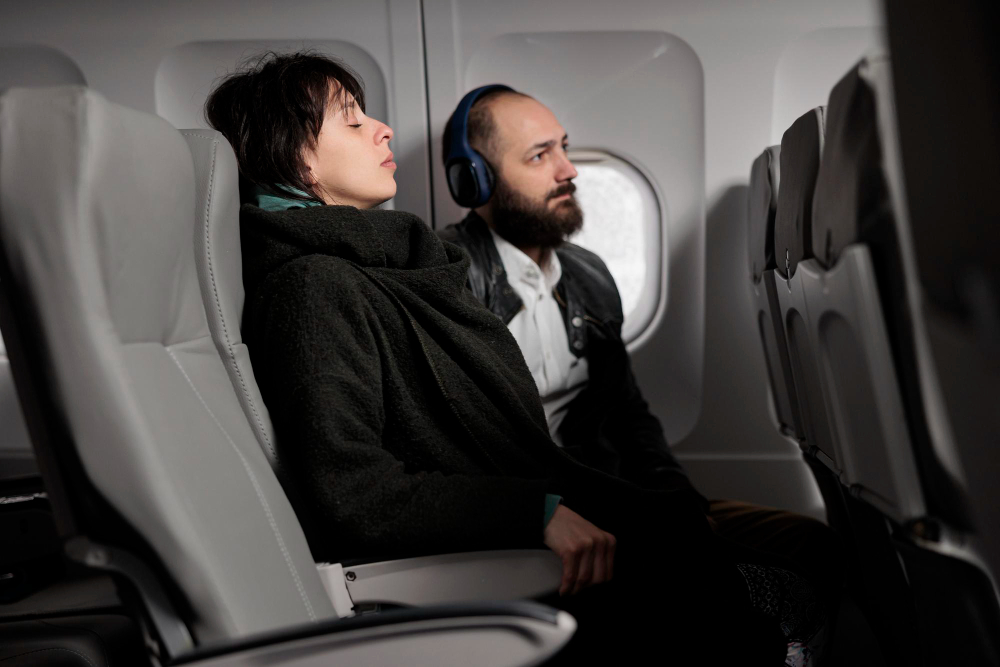
Cabin Pressure
On AC856, the every-other-Tuesday red-eye from Toronto to London, two frequent flyers who have shared the same cabin for three years and never spoken finally do, and each discovers the composed stranger they envied was drowning too.

The Point of No Return
On UA16, the red-eye from Newark to London, a woman who has crossed this ocean six hundred times watches a young colleague take her first-ever transatlantic flight, and does the math on a life spent living in the middle of the sea.

The Man Who Swept These Floors
On AZ611 from New York to Rome, a man flies home at the front of the plane for the first time in his life, to buy the ceramics factory whose floors he swept as a boy, and to face the brother who stayed while he became someone else.