The Man Who Swept These Floors
On AZ611 from New York to Rome, a man flies home at the front of the plane for the first time in his life, to buy the ceramics factory whose floors he swept as a boy, and to face the brother who stayed while he became someone else.
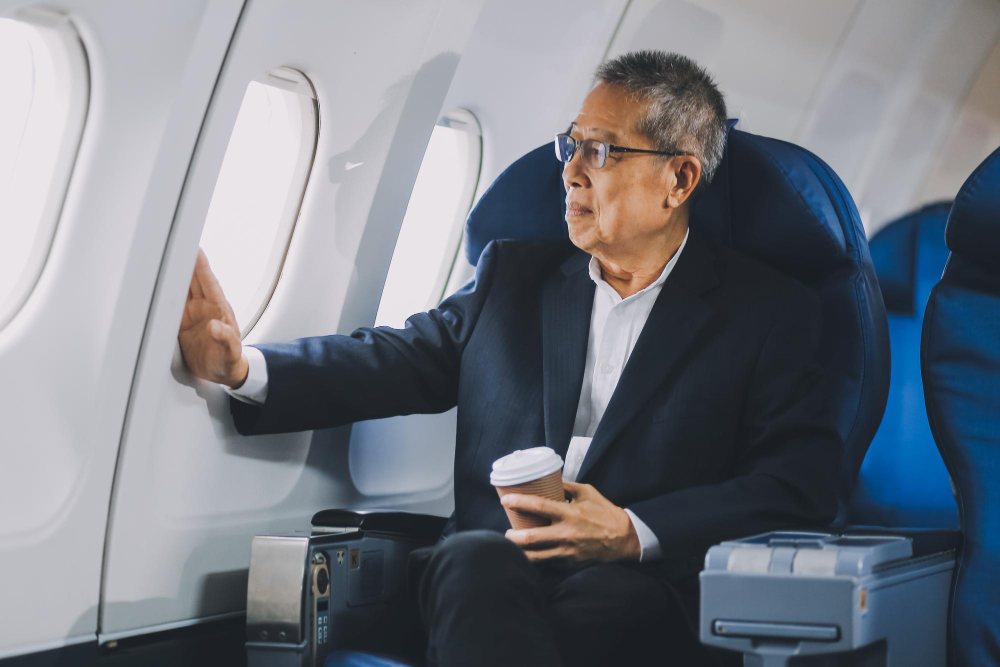
Giuseppe is sixty-two years old and he is sitting at the front of an aeroplane for the first time in his life, and he hates it.
He hates the flat seat and the little menu and the way the flight attendant calls him sir. He hates the champagne they brought before takeoff, which is still sitting there, because a glass of wine before a meal, in his book, is for people who have nothing to do the next day, and he has a great deal to do the next day.
His children booked it. Both of them, born in America, grown now, successful in the easy way that only people who were never poor can be successful. They booked the seat and they would not hear otherwise. Pop, they said, you are flying home to do the biggest thing of your life. You are not doing it hunched in a middle seat in the back.
So here he is, up front, uncomfortable as a man in a borrowed suit, flying to Rome.
Everyone up here calls him sir. Nobody up here would guess that the last time this man was in the country the aeroplane is flying toward, he had nothing in his pockets. Not a little. Nothing. Nineteen years old, one cardboard case, and a boat, because there was no money for a plane.
He left a town in the south that most of the people in this cabin have never heard of, a place of white stone and hard sun folded into a hill, where there was one road out and one reason to stay, and the reason to stay was the factory.
La fabbrica. The ceramics works. It had been there a hundred years. It made tiles and plates and the beautiful painted things the region was known for, and it employed, in one way or another, the whole town. If you were born there, you were born owing your bread to that factory, and most people paid the debt with their whole lives and were glad to.
His father worked there forty-one years.
Giuseppe can close his eyes right now, at thirty-eight thousand feet over the black ocean, and see his father's hands. They were always white. Chalked to the wrist with clay dust and glaze, cracked in the winter, and no amount of washing at the sink ever got the white fully out of the creases. His father died with white still in the lines of his hands, and Giuseppe, who has since shaken the hands of senators and bankers, has never once seen a pair of hands he respected more.
The boy swept those floors. Before he left. A few months, sixteen years old, after school, pushing a wide broom through the clay dust and the broken bisque, in the noise and the heat off the kilns, watching his father at the far end of the line and understanding, in the wordless way a boy understands these things, that this was the whole of the future on offer, and that it was an honest future and a small one, and that it would use him up the way it had used up his father, gently, completely, over forty years.
And one night he told his mother he was going to America, and she cried, and she did not try to stop him, which was the bravest thing she ever did.
He wants to be honest, up here in the dark, about the forty years in between, because the children think it is a triumph and it is, but a triumph is a thing you only see the shape of from far enough away, and up close it was just work.
He arrived with nothing and he did the jobs a man with nothing does. And slowly, over decades, in America, he built something. A business, in the end, in building materials. Tile and stone. The very thing. The boy who swept the ceramics floor spent his life, on the other side of the ocean, selling the fired earth his father had shaped, and made a great deal of money doing it, and became, to everyone in his new country, a man named Joe.
That is the other thing nobody up in this cabin would guess. That the sir in seat 2A is two men. Giuseppe, who left, and Joe, who arrived, and that after forty years he is still not entirely sure which one is real, and that this flight, this particular flight, is the first time in his life the two of them are being asked to sit in the same seat.
He has his father's factory card in his wallet.
His mother sent it to him after the old man died, twenty years ago, in an envelope with a Mass card and a few lines in her shaking hand. It is a stiff little identity card, worn soft at the corners now from twenty years in Joe's wallet, with a black and white photograph of a serious young man who is his father at an age Giuseppe never knew him, and a number, and the name of the factory.
He takes it out now, over the ocean, and holds it, the way you hold a thing that is the closest you can get to a hand that is gone.
Because here is why he is flying home, at sixty-two, at the front of the plane, and it is not a triumph, whatever the children think.
The factory is dying.
A fund bought it. Men in a city far away who have never smelled a kiln, who looked at a hundred-year-old ceramics works in a poor southern town and saw a brand they could stamp on cheaper tiles made somewhere with no minimum wage, and a piece of land, and a cost line to cut. They are going to close it. They are going to move the name away from the place and the people that made it mean anything, and they are going to let the town die, because a town like that is the factory, and always was.
The whole town is about to get the letter. The same letter, dressed in the same regretful language, that Giuseppe knows is written in a conference room by people who have decided, without malice, without ever learning a single name, to a place they have never stood inside.
And his brother Nino is one of the names on that list.
Nino stayed.
That is the whole of it, and the whole of forty years, in one word. Giuseppe went, and Nino stayed. Nino stayed and worked the factory their father worked, and married a girl from two streets over, and raised his children in the house they grew up in, and buried their mother and their father when the time came, while Giuseppe was on the other side of the world becoming Joe.
Giuseppe sent money. For forty years. Regular, generous, more as the business grew. He told himself, the way you do, that the money was love, that the money was him being a good son and a good brother from far away.
And every cheque, he knows now, landed in that house like a small insult. Because money is not presence. Money was the thing Giuseppe sent instead of coming home. Nino cashed every one of them and, Giuseppe suspects, hated every one of them, because each cheque said the same two things at once, which were I made it and I am not coming back.
They have barely spoken in years. At their mother's funeral, a few months ago, they stood together at the grave, two old men now, and Nino would not fully meet his eye, and Giuseppe flew back to America the next day, and understood on that flight that he had lost not just his mother but the last easy reason to ever come home.
So now, over the ocean, with his father's card in his hand, Giuseppe finally lets himself see what this trip actually is, underneath the deal.
He is going to buy the factory. He has the money. It makes no financial sense at all, which is exactly how he knows it is the truest thing he has ever done. He is going to buy it out from under the men in the far city, and he is going to keep the kilns lit, and keep the work in the town, and keep the name where the name was born.
But he has understood something, somewhere over the middle of the Atlantic, that all his money cannot help him with.
Buying the factory is the easy part.
Because he could fly in tomorrow as Joe, the rich American, the big man, and save the town with a stroke of a pen, and hand Nino his job back like a gift, and it would be the worst thing he could possibly do. It would be one more cheque. The biggest cheque of all. It would say, one final time, I made it and you did not, and it would end whatever is left between him and his brother forever, under a mountain of gratitude that Nino would choke on for the rest of his life.
Money bought the factory. Money cannot buy the homecoming. That, he has to do with something he has spent forty years forgetting he has, which is humility, and a broom.
So he is not going to go to the factory first. He decided this somewhere past the middle of the ocean, holding his father's card, and it is the only decision on this flight that matters.
He is going to go to Nino's house first. Before the lawyers, before the deal, before anyone in the town knows anything. He is going to knock on the door of the house they were both born in, as Giuseppe, not Joe, and he is going to ask his brother, not tell him, ask him, to run the factory. To be the one whose name is on it in the town. Because Nino stayed, and Nino knows every man on that floor and every kiln in that building and every name on that list, and Giuseppe has been gone forty years and knows nothing anymore except how to sell what other men make.
He is going to tell his brother the truth. That the money was never love, that it was the thing he sent instead of himself, and that he is sorry, and that he does not want to save the town so much as he wants, before it is too late, to come home to it, and that he cannot do it without the brother who never left.
And then, if Nino will have him, the two of them, two old men with the same blood and forty years of ocean between them, are going to go down to the factory together, and Giuseppe is going to do the thing he has been thinking about since he booked this flight.
He is going to find a broom.
And he is going to sweep a length of that floor, the way he did when he was sixteen, in the clay dust and the heat off the kilns, before anyone signs anything, before he is the owner of anything, just a man who once swept these floors, home at last, sweeping them again.
The coast of Europe comes up grey and gold in the early light, and somewhere down there, past Rome, down the long leg of the country, a white town is folded into a hill, and a factory is waiting to be told whether it lives or dies, and a brother is asleep in the house where it all began.
Giuseppe puts his father's card back in his wallet, over his heart. He does not drink the champagne. He asks, instead, for a coffee, strong, the way they make it at home, and the flight attendant calls him sir one more time, and this time he almost smiles, because in a few hours he is going to be, for the first time in forty years, nobody's sir at all.
He is just going to be Giuseppe. Home.
The North Atlantic Briefing is for the people who left with nothing and are deciding, now that they have everything, what they owe the place that made them. A factory is never a brand and a piece of land. It is the town, and the hands, and the names. Keeping the work where the people are is not sentiment, it is the whole point. A VDC Readiness Memo is a small, honest place to start when what you are really trying to save is the work itself, and the people who do it.
Related crossings:
- The Woman Who Learned Forty-One Names - the other side of the letter, and what it costs to close a place full of people.
- The Woman Who Flew Home to Show Her Father a Photograph - another homecoming, another factory floor, another set of a father's hands.
- The Man Who Got Everything He Wanted - a man discovering, at altitude, that the money was never the thing.
Next crossing: a young doctor flying home to a country that paid to train her and cannot afford to keep her, carrying the question of what she owes the place that made her, and what it owes her back.
Was this useful?
A quick reaction helps us shape the next issue.Thanks for the reaction —
More from the briefing

You'd Have Done the Same
When a storm shuts New York, a hard, successful man flying to the deal of his life is ordered down to a small town in Newfoundland called Gander, and taken in by strangers who want nothing at all.
Cabin Pressure
On AC856, the every-other-Tuesday red-eye from Toronto to London, two frequent flyers who have shared the same cabin for three years and never spoken finally do, and each discovers the composed stranger they envied was drowning too.

The Point of No Return
On UA16, the red-eye from Newark to London, a woman who has crossed this ocean six hundred times watches a young colleague take her first-ever transatlantic flight, and does the math on a life spent living in the middle of the sea.