The Man Who Only Trusted What He Could See
On DL132 from Detroit to Amsterdam, an operations chief who only ever trusted people he could see flies home from a meeting that broke his oldest rule. A woman put her hand on his machine and changed what the word ours means.
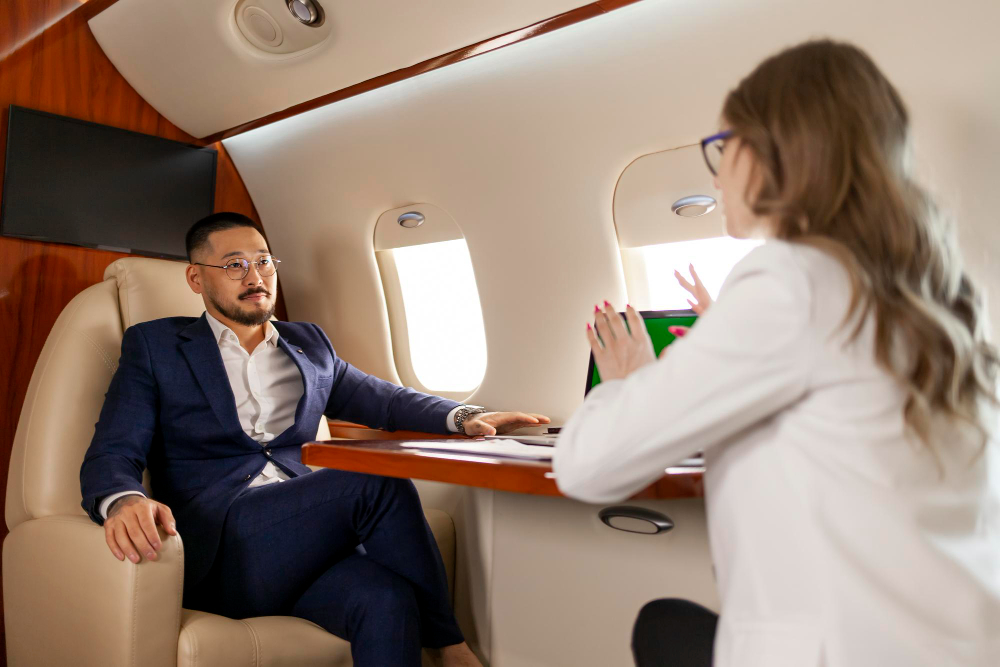
Rick did not trust people he could not see.
He would have told you so himself. He was a plain man and he liked plain rules.
Thirty-one years in manufacturing. He had started on the floor, running a machine, grease under his nails, a paycheck that felt like a promise somebody kept.
He believed in that. A person you could look at. A machine you could put your hand on. Work you could walk outside and point to.
Everything else sounded to Rick like a story someone told you right before they took your money.
He had a reason. He always told people he had a reason, and he did.
Fifteen years back, a different company, a different title, some clever men in a conference room had a plan. Send the work out. Save a fortune. Trust the process.
The parts came back wrong. Then a line went down. Then another.
And when the mess got too expensive, the company did what companies do. It cut people to pay for it.
Rick signed some of those. Men he had started next to. Men whose kids he knew.
He drove home the night of the last one and sat in the driveway and did not go inside for a while.
After that he had a rule, and the rule was simple. If it matters, keep it where you can see it. Keep it ours.
So when Rick took the new job outside Detroit and found that the most important work in the building was being done by people he had never met, on the other side of the world, who were not even employees, he felt the old cold feeling come back.
He said the sentence in his second week. If it matters, it should be ours.
He meant it. He was already planning how to bring it all back in.
Then the woman who ran the outside team asked to come see him. Nadia. She flew in from Paris.
And she did something strange. She brought three of them with her.
Rick had expected a sales pitch. Slides. Big numbers. A smooth person telling him not to worry.
Instead, three tired people walked into his plant who had gotten off planes from three different corners of the earth.
A quiet man from Poland in a jacket that still had the fold lines in it. A woman from the Philippines who had been traveling for almost two days. And a woman from Nigeria named Chika.
Rick shook their hands. He did not know what to do with them, honestly.
So he did the thing he always does. He took them out to the floor.
The floor is Rick's test. He has used it his whole life. You can tell everything about a person by how they are on the floor. Whether they flinch at the noise. Whether they look at the machines or the exits.
The Polish man knew things. Rick could tell within a minute. He asked a question about a tolerance that only someone who really knew would ask.
The woman from the Philippines watched everything and missed nothing.
And then there was Chika.
Chika stopped walking about halfway down the line.
She was looking at one machine. A big one. A cell that made a part Rick's company had been building for two years.
She walked up to it slowly, like you walk up to something in a museum. And she reached out and put her hand flat on one piece of it. A bracket. A plain steel bracket, nothing special, bolted to the frame.
She stood there with her hand on it and she did not say anything for a long moment.
Then she said, quietly, almost to herself, I drew this.
Rick did not understand at first.
She said it again. I drew this. This bracket. I have thought about this bracket for two years. I know why every hole is where it is. I moved that one, there, three millimeters, in the winter, so it would clear the line.
She kept her hand on the steel.
She said, I have seen it a thousand times on my screen. I never thought I would touch it.
And then Chika, this woman who had flown across the whole world, stood on the floor of a plant in Michigan with her hand on a bracket, and she cried. Not loudly. She just could not help it.
Rick stood there and watched a woman touch his machine for the first time and understood that she had loved it for two years from four thousand miles away.
Something turned over in his chest that he did not have a word for.
Because here was the thing Rick could not get around, then or now.
He had a floor full of people who badged in every morning. Good people. His people. People he could see.
And some of them cared, and some of them were just there for the paycheck, the same as anywhere, the same as always.
And here was a woman who was not his. Not on his payroll. Not in his country. A woman he had been three days from cutting without ever knowing her name.
And she loved that machine more than almost anyone who clocked in beside it.
She was more his than half the building. And he had never met her until Tuesday.
Now Rick is on a plane.
DL132, Detroit to Amsterdam, the middle of the night over the ocean, everyone asleep but him.
He is going over for the quarterly review. Nobody there is waiting to fire him or fight him. The call about Nadia's team is his to make, in his own time, in an email he has not written.
Three days ago he knew what that email would say. Bring it home. Make it ours. Keep it where I can see it.
Now he does not know.
Because the whole rule, the rule he built after that bad night in the driveway, rested on one quiet idea he had never once said out loud.
That ours means safe. That a person on your payroll will care, and a person who is not will not.
And a woman with her hand on a bracket had just shown him, without arguing, without a single slide, that he had that backwards his entire life.
Payroll never made anybody care. It never once did. He had cared when he was a kid on the floor because of who he was, not because of whose name was on the check.
Chika cared because of who she was. From Lagos. For two years. For a machine she had never touched.
Rick takes out his notebook. The little one he keeps in his coat.
He does not write a recommendation. He does not write a plan.
He turns to the back, to the blank pages, and he writes three names.
Tomasz. Rosalie. Chika.
Not the vendor. Not the outside team. Three people.
He looks at the names for a long time while the plane crosses the dark.
He is not sure yet what he is going to do about the big decision. He will have to think. He is a careful man and the scar is real and he is not going to pretend it is not.
But he knows one small thing, and he writes that down too, underneath the names, so he will not talk himself out of it when the noise of the week comes back.
When this is done, whatever else happens, he is going to fly Chika back out. Properly this time. A real seat. And he is going to walk her down the whole line, every machine, every one, and let her put her hand on all of it.
And he is going to bring the guys on the floor over, the ones who have been building her drawings for two years without knowing her face, and he is going to say, this is Chika. She drew this. She drew all of it. She is one of ours.
He underlines the last part. One of ours.
Then he closes the notebook and looks out the window, and for the first time in a long time the dark out there, full of people he cannot see, does not feel like a risk.
It feels like a place full of Chikas.
And Rick, who spent his whole life trusting only what he could put his hand on, falls asleep somewhere over the ocean thinking that maybe the thing you can see was never the point.
Maybe it was always who shows up in the dark, when no one is watching, and does the work like they love it.
Because they do.
The North Atlantic Briefing is for the people who were taught that if it matters, it has to be yours. Ownership was never a paycheck. It was who cares when no one is watching. A VDC Readiness Memo is a short, honest look at how to find the people who already do, and make them one of yours.
Next crossing: Chika, in a window seat she did not pay for, flying home to Lagos with a photo on her phone of her own hand on a machine, and a message from a man in Michigan she is almost afraid to open.
Was this useful?
A quick reaction helps us shape the next issue.Thanks for the reaction —
More from the briefing

You'd Have Done the Same
When a storm shuts New York, a hard, successful man flying to the deal of his life is ordered down to a small town in Newfoundland called Gander, and taken in by strangers who want nothing at all.
Cabin Pressure
On AC856, the every-other-Tuesday red-eye from Toronto to London, two frequent flyers who have shared the same cabin for three years and never spoken finally do, and each discovers the composed stranger they envied was drowning too.
The Point of No Return
On UA16, the red-eye from Newark to London, a woman who has crossed this ocean six hundred times watches a young colleague take her first-ever transatlantic flight, and does the math on a life spent living in the middle of the sea.