The Man Who Never Rounded Anyone Off
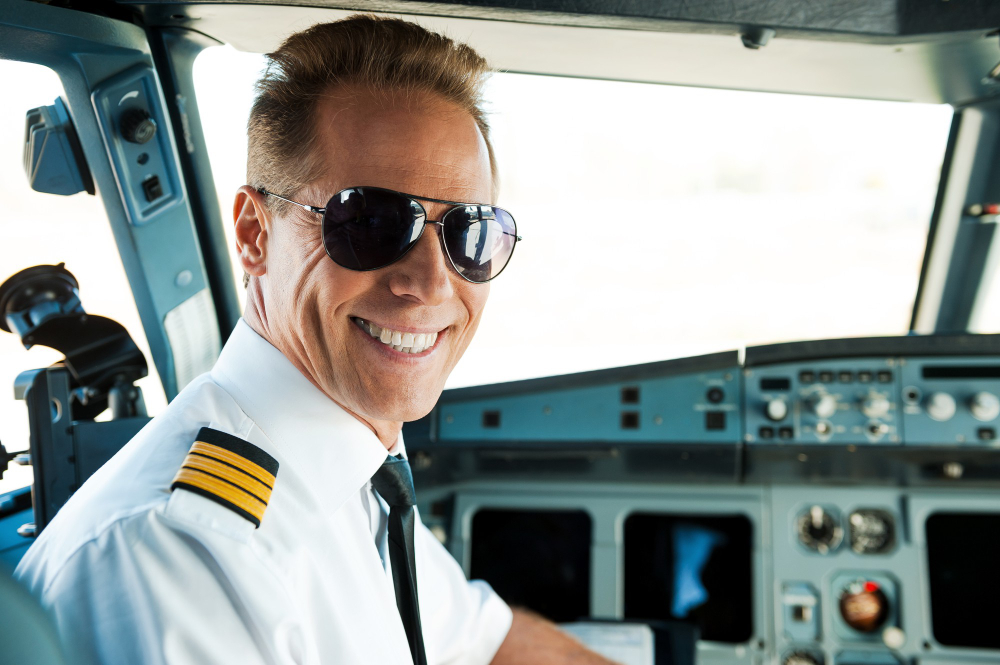
On BA175, the afternoon crossing from London to New York, a captain flies his last flight. For thirty-one years he has kept a private book. Not hours. Souls. And nobody has ever asked him what he thinks about the machine that took his hands off the controls.
The number in Alan's book this morning is 887,010.
He wrote it there thirty-one years ago as a four, and it has been climbing ever since.
Today he will write in it for the last time.
BA175 pushes back from Heathrow at ten past three in the afternoon, London to New York, and Alan is sixty-five years old, and this is the last airplane he will ever fly.
Nobody has made a fuss. There will be a fuss at the other end. The fire trucks will come out and throw water over the aeroplane in an arch, which is the tradition, and he will taxi through it and the passengers will film it on their phones without knowing what it is for, and someone will hand him a card.
He is trying not to think about it.
He is thinking instead about the number.
You should know how he got here, because he did not get here the way people think.
Alan grew up in a small house under the flight path, in a row of small houses that all shook slightly, four or five times an hour, forever.
Everybody on that road hated the aeroplanes.
He was the one boy who went out into the garden.
He would stand in the grass with his head back and watch the big ones come over, low, so low you could see the grey of the belly and the lights and the wheels coming down, and he would stand there until it was gone and then wait for the next one.
His mother thought there was something wrong with him.
There was no money for flying lessons. There was no money for anything. Nobody in his family had ever been on an aeroplane, let alone in the front of one.
So he did it the long way, which is the way almost nobody has the stomach for.
He worked. He washed aeroplanes. He paid for one hour at a time, cash, at a little flying club in the rain, and when he ran out he went back to work and saved up for the next one.
He instructed for six years in small shaking machines with students who frightened him, in weather that frightened him more, for money that was not money.
He got to the airline late. He was nearly thirty-three. Everyone in his course was twenty-four.
He has never once, not one single day in thirty-one years, walked out to an aeroplane and not felt something in his chest about it.
That is the thing that has to be understood about Alan before any of the rest of it makes sense.
He did not do this for a living.
He did it because he was the boy in the garden.
The book was Ken's idea.
Ken was his first training captain on the big jets, a large slow Yorkshireman with a moustache from another era, who had been flying since before Alan was born and who died in 2011 of something quick.
Ken watched him one day in the crew room, twenty-eight years ago, filling in his logbook. Hours. Every pilot keeps them. It is how you are measured your whole career. Hours in the air, hours on type, hours in command.
Ken looked over his shoulder and said, what are you counting there.
Alan said, hours.
And Ken said, the aeroplane doesn't care how many hours you've got, son.
He tapped the back of the flight deck door with one big finger.
He said, count what's behind that.
So Alan bought a second book. A cheap one. Nothing official, nothing anybody would ever ask to see.
And on every flight since, when the ground asks him for souls on board, which is the phrase, which is the real and actual phrase they use, he writes it down.
Not hours.
Souls.
Three hundred and eleven. Two hundred and forty. Two hundred and ninety-six.
For thirty-one years.
887,010.
Here is a thing about Alan that took his wife about a decade to stop finding funny and another decade to find sad.
He has been to New York nine hundred and something times.
He has never seen it.
Not once.
He lands, and the crew bus takes them to a hotel eleven minutes from the airport, and he sleeps in a room where the curtains do not quite meet, and he eats something, and he sleeps again, and the bus takes him back, and he flies home.
Nine hundred times.
He knows the taxiways at Kennedy better than he knows his own high street. He knows which stand puts the sun in your eyes in October. He knows the sound the runway makes.
He has never stood in Manhattan.
He has carried, by his own careful count, the better part of a million people to that city so that they could go and do the thing that mattered to them, and he has spent every one of those nights in a room by the motorway with the curtains not quite meeting.
He is the only person on the aeroplane who is not going anywhere.
He is the delivery.
And then there is the other thing, the one he has never said out loud to anybody, including his wife, including Ken, and certainly including the young woman sitting next to him today.
The aeroplane does not need his hands anymore.
When he started, he flew it. Really flew it. Your hands and your feet and your eyes, all day, and at the end of a bad night in the weather you came off the aeroplane wrung out like a cloth and you had earned every penny.
Now he watches.
It is not that the machine took over all at once. It crept. A little more every few years, every new type, every upgrade. It flies better than he does, in the sense that matters to a regulator. It is smoother. It does not get tired. It does not have a row with its wife at breakfast.
He turns it on eight minutes after takeoff and it flies the ocean and it can land the aeroplane in fog he cannot even see the lights in.
Alan sits and monitors it.
He has spent about fifteen years now quietly grieving something he is not allowed to mention, because to mention it sounds like a man complaining that the tools got good.
The boy in the garden did not stand out there in the rain to grow up and watch.
So. He has thought about it. He has had a great deal of time to think about it, out over the water, with nothing to do.
He has had the whole conversation with himself, all of it, every night for fifteen years, thirty-eight thousand feet above an ocean, alone in the front with a machine that no longer needs him.
Which is, he is aware, exactly what everybody behind that door is doing too.
He cannot see them. He never sees them. In thirty-one years he has probably spoken to fewer than fifty of his passengers, and most of those were a hello in the doorway.
But he knows them.
You learn what a cabin is by what the crew tell you, and by the small strange details that come forward over the years, and by simply being the man who has carried the better part of a million people across the same ocean.
He knows there is always one who does not sleep. Always. In every single cabin, on every single crossing, there is one person lying flat in the dark with their eyes open.
He knows about the ones who never close the laptop. Sarah told him once about a man who bought the seat beside him and put his computer on it, and left it there, open, for eight hours.
He knows about the ones who cry. It happens more than people would believe. Something about three in the morning over Greenland. There is a woman in the cabin crying quietly about once a week and the crew have long ago learned to bring water and say nothing.
He knows about the ones down the back who have already been travelling for a day and a half before they even got on his aeroplane, who walk the whole length of it to the last row with their bag on their shoulder, past everybody, and nobody looks up.
He has carried all of them.
Every single one of them was flying across his ocean to go and sort out something that would not sort itself out. He has known that for thirty-one years the way you know the weather.
And not one of them, in all that time, ever put their head round the door and asked him what he thought.
Which is fine. Genuinely. He is not owed a conversation.
It is only that he has been sitting up here the whole time with the answer, and nobody has ever wanted it.
Aisha is twenty-eight and she is extremely good.
She is his first officer today, which is a coincidence and not a coincidence, because the roster is the roster, but he is glad it is her.
She flies the aeroplane better at twenty-eight than he did at thirty-eight. He has told her that. She did not believe him.
Somewhere over the middle, with the long sunset going on and on out to the right of them, refusing to finish, because that is what a westbound afternoon does, she says something.
She says it lightly, the way you say a thing you have been carrying.
She says, do you ever think, by the time I'm your age, they won't need two of us up here. Or one.
She laughs a bit at the end of it.
Alan does not answer.
He looks out at the light on the water, which has been the same light for four hours and will not go out.
She lets it drop. She is polite. She thinks he did not hear her, or that he is a man of a certain age who does not want to talk about it.
He heard her.
He is just not going to give her the answer at cruise, in the middle, in the light.
Somewhere past the coast, coming down over Long Island in the dark with the whole of New York laid out there glittering like something spilled, Alan does one last thing for himself.
He takes it off the autopilot.
He does not have to. It is his to do. And he puts his hands on it, and for about four minutes, on the last approach of his life, over a black bay, with three hundred people behind the door who have no idea, Alan flies the aeroplane.
Just his hands. Just him. The way he did in the rain at the little club when he was twenty-two and paying for it an hour at a time.
It is completely unremarkable. Nothing happens. It is a good approach, and then a good landing, one of his better ones, and Aisha says nice one and means it.
And that is it. That is the last time in his life that a man who stood in a garden under the flight path will ever have an aeroplane in his hands.
The fire trucks come out and throw the water over them and the arch of it goes up white in the lights and it drums on the roof, and Alan taxis through it with his eyes stinging and his face completely still.
They shut it down at the stand.
The passengers go. Three hundred people file out through the door beside him and about eleven of them say thank you, which is a good ratio, actually, that is a better ratio than usual.
The crew go.
And then it is the two of them, in a switched-off aeroplane, at a gate at Kennedy, at ten past nine at night.
Alan takes the book out of his bag.
Aisha watches him. She has seen him do it a hundred times and has never asked.
He writes today's in. Two hundred and ninety-one.
Then he adds it up, which takes a moment, and he writes the total on the last line, and he looks at it for a while.
Aisha says, what is that.
He turns it round and shows her.
887,301.
She looks at it. She looks at him.
She says, what is it.
He says, people. That I've carried.
She takes the book, gently, the way you take something old. She turns a few pages back. Thirty-one years of a man's handwriting getting slowly worse. Two hundred and forty. Three hundred and eleven. Two hundred and eighty-nine.
She says, nearly a million people.
And Alan says, no.
He says it kindly. But he says it.
Eight hundred and eighty-seven thousand, three hundred and one.
She looks up at him.
He says, that was Ken. He told me, don't you ever round them off. You round them off and they turn into a number. And then one night you'll be tired and there'll be weather and you'll do the arithmetic on a number instead of on people, and you'll get it wrong.
He says, so I've never rounded them off. Not once. Not one flight.
And then, because it is his last night, and because she asked him at cruise and he did not answer, and because in thirty-one years and eight hundred and eighty-seven thousand people nobody has ever asked him what he thinks, Alan tells her.
He says, you asked me if they'll need us.
He says, the machine flies the aeroplane better than me. It has for years. That's not a threat, that's just true, and any pilot who tells you different is protecting himself.
He taps the book.
He says, but it has never once carried anybody.
She does not say anything.
He says, it holds them. That's a different word. It holds them at thirty-eight thousand feet very accurately for seven hours and then it puts them down.
He says, carrying is when you counted them. When you know it's two hundred and ninety-one and not about three hundred. When you went out to look at the weather at Boston yourself at five in the morning because if it goes wrong at the other end it is going to go wrong for two hundred and ninety-one people and you are the one who decided.
He says, the machine can do the flying. It cannot do the caring, and the caring is the job. It always was. I just thought it was the flying, for about fifteen years, and I was miserable, and I was wrong.
He says, so, yes. They'll need you.
He says, they will need you for exactly as long as you are willing to count them.
Aisha sits in a dark aeroplane at a gate in New York and does not trust herself to speak for a second.
Then she says, that's the first sensible thing anyone's said to me about it in six years.
And Alan laughs, properly, for the first time all day, and says, well, nobody asked, love.
She gives him back the book.
She says, what are you going to do tomorrow.
And Alan puts it in his bag and thinks about it, and says, I'm going to go into the city.
She says, you've been coming here thirty years.
And Alan says, I know.
The train from Jamaica takes about twenty minutes.
He has looked at it, from the crew bus, nine hundred times.
He gets on it at twenty past ten at night, in his coat, with his bag, an ordinary tired man among the Thursday-night people going home, and nobody on that train has the faintest idea that the quiet bloke by the door has carried eight hundred and eighty-seven thousand and three hundred and one human beings across an ocean and never once lost one.
He comes up out of the ground somewhere in the middle of Manhattan.
And it is enormous, and it is lit up, and it is loud, and it is nothing at all like it looks from the air, and it goes up and up on every side of him.
And Alan stands there on the pavement in the middle of it with his bag in his hand and his head back, the way he stood in the garden.
Arriving, for the first time, at sixty-five years old, at the place he has been going his whole life.
The North Atlantic Briefing is for everyone on the aeroplane. This one is about the man at the front, and the only real distinction there has ever been between a resource and a person, which is that you count a resource in the aggregate and you count a person one at a time. Every company talks about headcount and capacity and rounds its people off. A Virtual Delivery Center is only worth anything if the people in it get counted. One at a time. By name.
Next crossing: a woman flying out to close a plant, with a list in her bag, and forty-one names on it, and a decision to make about whether she is going to read them or count them.
Was this useful?
A quick reaction helps us shape the next issue.Thanks for the reaction —
More from the briefing

You'd Have Done the Same
When a storm shuts New York, a hard, successful man flying to the deal of his life is ordered down to a small town in Newfoundland called Gander, and taken in by strangers who want nothing at all.
Cabin Pressure
On AC856, the every-other-Tuesday red-eye from Toronto to London, two frequent flyers who have shared the same cabin for three years and never spoken finally do, and each discovers the composed stranger they envied was drowning too.

The Point of No Return
On UA16, the red-eye from Newark to London, a woman who has crossed this ocean six hundred times watches a young colleague take her first-ever transatlantic flight, and does the math on a life spent living in the middle of the sea.