The Woman Who Kept a Notebook of Promises
On LH401, the overnight from New York to Frankfurt that skips the night and lands in tomorrow, a veteran CIO decides whether to give the board the AI number it wants, or finally tell the truth about the gap between the demo and the quarter.

The flight leaves on a Tuesday evening and lands on a Wednesday morning, and somewhere over the ocean it quietly skips the night, the same way it skips Ruth's chance to sleep.
LH401, New York to Frankfurt. A 747, the old queen, one of the last still flying this route, with the strange narrow staircase up to the small cabin in the nose where Ruth sits by the window with her coat still on. Below her, Queens slides away in a sheet of yellow light, then the dark coast, then the ocean. Ahead of her, six hours ahead and getting no closer however fast the plane flies, Frankfurt is already most of the way through a night she will never get to have. She is not crossing the Atlantic so much as flying into tomorrow. By the time the wheels touch down it will be a day she has not lived yet, full of decisions she has already lost sleep over.
That is the part of the job nobody ever sees. She is always a few hours into the future. She has been there her whole career.
Ruth is fifty-eight, and she has been doing some version of this work since she was the only woman on a raised floor full of humming gray cabinets, when the future arrived on tape reels and everyone spoke about it the way they now speak about artificial intelligence, as though it had come to save them. She has lived through every wave. The mainframe gave way to the desktop, the desktop to the web, the web to the thing they called digital transformation, and each wave broke over the company with the same sound, a great inrush of promise, and then a slow retreat that left the same wet sand behind. She is not a cynic. That is important to understand about Ruth. She loves the machines. She has loved them since she was twenty-three. What she has stopped loving is the gap, and she is the only person she knows who has spent thirty years staring directly into it.
She is flying to Frankfurt for the leadership offsite. Tomorrow, in a glass room above the river, she will stand in front of the executive committee and the global business heads and she will be asked for a number. The chief executive has already half-promised that number to the board, in a sentence that began with the words our AI strategy will and ended with a figure that made everyone in the room sit up. A percentage of productivity. A line on a slide. It is Ruth's job, now, to fly across an ocean and either nail that number to the wall or be the one who quietly takes it down, and she has not decided which.
In her bag, under the laptop she barely uses anymore, there is a notebook.
It is paper. It is the same kind of notebook she has used for thirty years, a plain hardback with a black cover gone soft at the corners, and when one fills up she buys another exactly like it, and there is a shelf of them at home that her husband has been told, gently, never to throw away. On the first page of every project she has ever run, in her small upright handwriting, she writes the promise. The thing that was said in the bright meeting at the beginning, the number, the date, the future everyone could see so clearly. And then, years later, on the last page of that project, she writes what actually happened.
The first pages and the last pages do not match. They have never once matched. Thirty years of her own handwriting, and the gap between the opening line and the closing line is the truest record of her professional life. It is the only honest document in the entire company, and it is the one no one will ever read.
She has seen the demo, of course. A dozen times. She made them run it again and again, in the way that you press a bruise. And it is beautiful. She will say that plainly. The thing works. You type a question in plain English and it reads ten years of contracts and finds the clause. You ask it to draft the report and it drafts the report. In the demo, the data is clean, and the question is the right question, and the person asking knows exactly what they want, and the answer appears like a sunrise, and everyone in the room makes the small involuntary sound that people make when they see the future arrive early.
And Ruth, who is always a few hours into the future, knows precisely what the demo does not show.
It does not show the data that does not match, the four systems that each call a customer by a different name, the field that someone in a regional office has been using for the wrong thing since 2014. It does not show the team that is already underwater, that will be handed this miracle on a Tuesday and told to also keep the lights on. It does not show the manager who will quietly route around it because his bonus depends on the old way. It does not show the eleven months between the demo and the day the thing actually changes how a single human being does a single piece of real work. The demo is a clean room. The quarter is the world. And the distance between them, the long muddy distance, is the thing the company has never once been willing to own. They buy the tool. They have always bought the tool. They have never bought the delivery, the unglamorous person-by-person system-by-system labor of dragging the promise across the gap until it becomes real. And so the last page never matches the first.
Her own engineers told her the truth, the way they always do, not in the meeting but afterward, in the hallway, in the half-sentence at the end of a call when the executives have dropped off. It will not be ready. Not the way they think. Not this year. They are not being negative. They are the only other people in the company who live in tomorrow with her, and they are tired of being right too early.
Somewhere over the black middle of the ocean, with the cabin lights down and the old plane humming its enormous lullaby and the night sliding past the window faster than any night should, Ruth takes out the notebook and a pen and opens it to the next clean page.
She means to write the promise. That is the ritual. The opening line. Our AI strategy will, and then the number. She has the pen above the paper. And she finds she cannot write it, because she has already, in thirty years of last pages, read how this one ends.
She sits with the pen for a long time. The man across the aisle is asleep. The screen on the bulkhead shows the little plane crawling east into the light that has not reached them yet. And Ruth understands, with the particular clarity that comes at three in the morning at thirty-eight thousand feet, that she is tired of writing the same two pages. That she is near the end of her career, and she could fly to Frankfurt and stand up and give them the number, the beautiful number, and retire in two years with a clean record and a watch, and let the next person write the last page after she is gone.
Or she could do the thing she has never once done in thirty years, which is to walk into the bright room at the beginning and tell the truth about the gap. Not to kill the future. She loves the future. But to say, out loud, to the people who sign the checks, that the demo is the easy part, that the tool was never the thing, that what they have never been willing to pay for is the one thing that has failed them every single time, the ownership of the long muddy distance between the promise and the Tuesday morning. That if they want the last page to finally match the first, someone has to own the delivery, end to end, and answer for the outcome, and not just for the purchase.
She does not write the promise.
Instead, on the clean page, in her small upright hand, she writes a single line, which is not a number and not a date, and she closes the notebook over it and slides it back into her bag. She will not say here what she wrote. It is hers. But she sits back in the seat, and for the first time on the flight her shoulders come down from around her ears, and she watches the thin red line of the morning come up over the curve of the earth, the morning of the day she has been dreading, arriving early, the way the future always does.
The plane begins its descent into a Frankfurt that has already finished the night without her. Ruth has not slept. But she has decided something, and unlike the number on the slide, it is true, and she is the only one on board who knows it yet.
The North Atlantic Briefing is for the people who live a few hours into the future and carry what they see there alone. If your company keeps buying the demo and inheriting the gap, a VDC Readiness Memo is a short, honest look at who could own the long distance between the promise and the result.
Was this useful?
A quick reaction helps us shape the next issue.Thanks for the reaction —
More from the briefing

You'd Have Done the Same
When a storm shuts New York, a hard, successful man flying to the deal of his life is ordered down to a small town in Newfoundland called Gander, and taken in by strangers who want nothing at all.
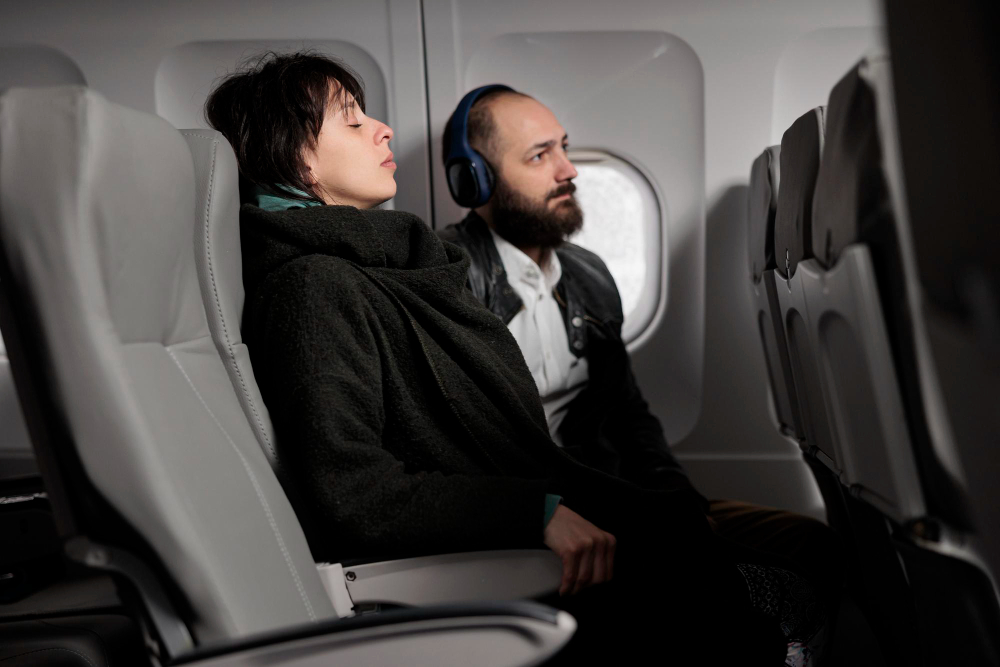
Cabin Pressure
On AC856, the every-other-Tuesday red-eye from Toronto to London, two frequent flyers who have shared the same cabin for three years and never spoken finally do, and each discovers the composed stranger they envied was drowning too.

The Point of No Return
On UA16, the red-eye from Newark to London, a woman who has crossed this ocean six hundred times watches a young colleague take her first-ever transatlantic flight, and does the math on a life spent living in the middle of the sea.