The Man Who Bought a Seat for His Laptop
On BA287, the long daytime crossing from London to San Francisco, a founder flies eleven hours to hire the person who could finally take the work off his hands, and spends the whole flight proving why he never will. A story for founders who cannot let go.
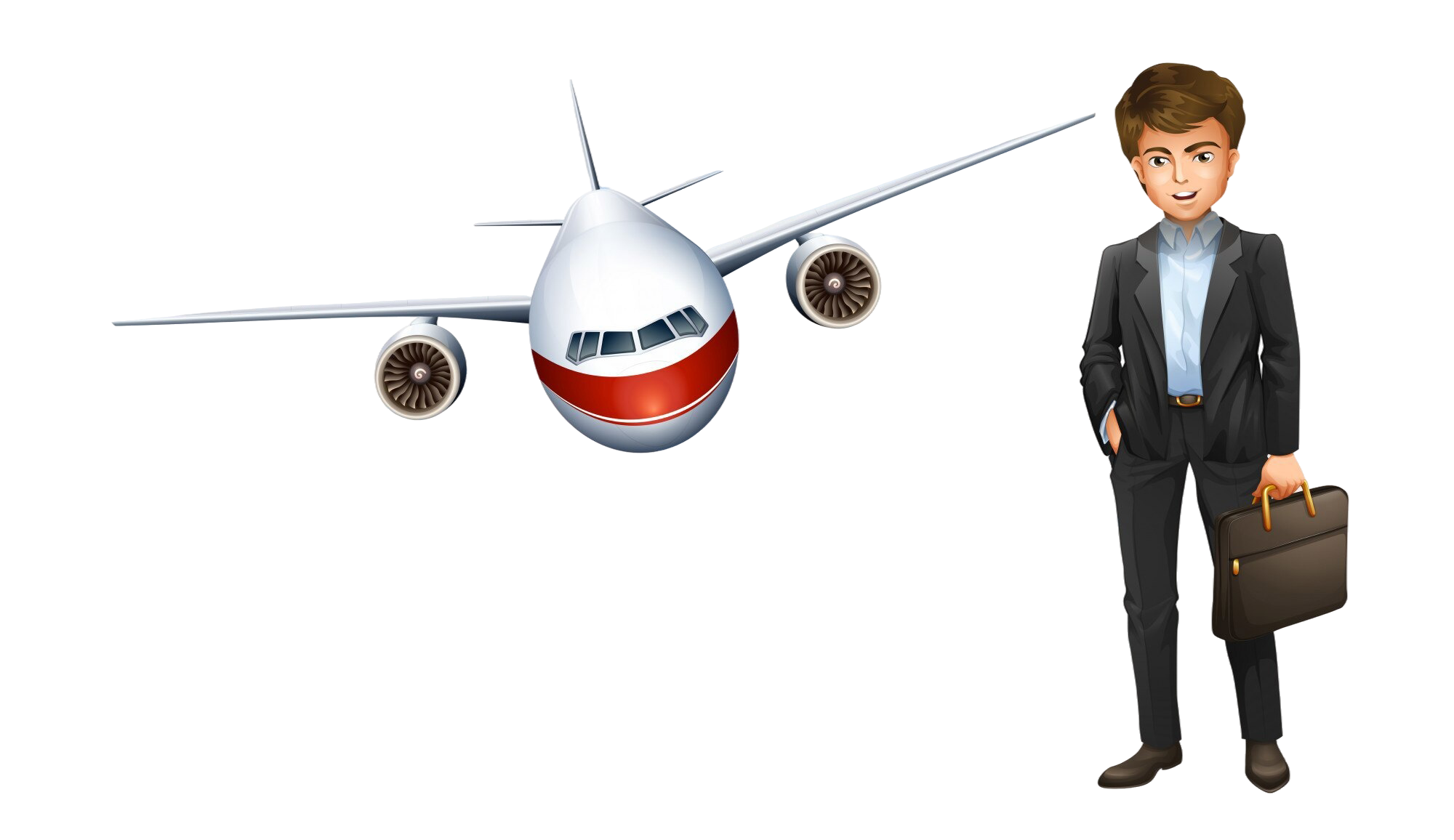
Daniel paid for two seats, and only one of them is for a person.
The other, 1K by the window, holds his bag, his headphones still zipped in their case, and his laptop, open, throwing its pale light onto the cabin wall where outside there is nothing but white cloud and a sun that has not moved in three hours and will not move for eight more.
BA287 left Heathrow a little before noon. It will reach San Francisco in the early afternoon, the same afternoon, which is the strange arithmetic of flying west across the top of the world. Eleven hours in the air to land three hours after you left. The day stretches out flat and bright and refuses to end. The crew lower the blinds and dim the lights and hand out little eye masks, performing a night that the sky outside flatly contradicts. Everyone around Daniel is pretending it is time to sleep. Daniel is not pretending anything. He is working.
The laptop is seven years old. It is heavy and slow and the letters have worn off three of the keys, the A and the S and the E, rubbed blank by the same two thumbs over thousands of nights. The company has bought him newer ones. They sit in a drawer at home. He will not use them. He built the first version of the product on this machine, in a spare bedroom, when the whole company was him and a borrowed idea and a kettle he boiled too many times a night. There were four of them once it became real. Now there are four hundred. He is flying to San Francisco in seat 1A, with his old laptop in seat 1K, and the four hundred people behind him still fit on that machine, in some way he could not defend out loud, because he still believes that it all really runs on him.
That is the joke of this particular flight, though Daniel is not laughing. He is crossing an ocean and a continent to meet a woman who is, by every account, brilliant. She has scaled two companies larger than his. The whole board wants her. He wants her, or he wants to want her, which is not the same thing. She would be the Chief Operating Officer. She would take the running of the company, the part that wakes him at three in the morning, the part he carries through every dinner and every school play and every flight, and she would carry it instead, and carry it well.
And he has spent the first three hours of this flight rewriting a document she has not asked to see, because he does not trust that it will be done right unless his own worn thumbs do it.
He knows. That is the worst part. He is not a stupid man. He can see the shape of his own problem from the outside, the way you can watch a friend make a mistake you would never be cruel enough to name. He knows that a company where everything still runs on the founder is a company with a low ceiling and a single fragile spine. He knows that the version of himself the company needed at four people is not the version it needs at four hundred. He knows that the most important thing he could possibly do, more important than any document, is to learn to set the work down and let it belong to someone else.
He just cannot do it on this flight. Or the last one. Or the one before that.
Because underneath the standards and the late nights and the heavy old laptop there is a quieter thing he does not look at directly. If the company runs without him, then who is he. He has been the person who does it for so long that he is no longer sure there is a Daniel left over once you take the doing away. The work is not only what he does. Somewhere along the way it became the proof that he matters. Hand it over, and he is just a man in seat 1A who paid extra so that nobody would sit beside him and ask what he does for a living.
Somewhere over the ice of Greenland, with the cabin dark and false and the real sun blazing behind the blind, Daniel closes the laptop.
He does not mean to. His hand simply does it, the way a tired hand finally sets down something heavy. The screen light goes out. The old machine sits there in the next seat, closed and quiet, for the first time he can remember. And nothing happens. The plane does not fall out of the sky. The company, four hundred strong and seven hours behind him, keeps doing whatever it is doing without his thumbs on it. He sits in the strange bright dark with his hands empty and feels, instead of relief, a kind of vertigo. The vertigo of a man who has been holding a wall up for years and has just been told, gently, that it was never the wall that needed him. It was him that needed the wall.
He thinks about the woman waiting in San Francisco. He had been planning, without quite admitting it, to hire her and then never quite let her do the job. To buy the title and keep the work. To put a Chief Operating Officer in the second seat and go on operating the company himself, the way the laptop sits in 1K, close, never out of reach, never actually handed over.
What if he let her run it. Not lent. Given.
He does not reopen the laptop. That is the whole of it, the only thing that happens on BA287 that matters. A man crosses an ocean and a continent, and for the last few hours of it he lets the work sit closed in the seat beside him and looks out at the country coming up green and brown and enormous beneath the wing. The grey teeth of the Rockies. Then the long gold valley. Then the bay, bright and flat, tilting up to meet him.
When the wheels touch he will turn the laptop on and the day, the real day, his day, will pour back in. But he has decided one small thing somewhere over Greenland that he is going to try very hard not to un-decide. He is going to walk into that meeting and offer this woman the company. The actual running of it, not the title with his hands still on the wheel. And then, the harder part, the part no flight can do for him, he is going to go home and practise the one thing he has never once managed, which is to let another pair of hands do the work, and to find out whether there is a Daniel underneath who is worth something even when his own thumbs are finally still.
The plane lands. The second seat is empty except for an old laptop, closed.
The North Atlantic Briefing is for the founders in 1A who paid extra so no one would sit beside them. If your company still runs on one pair of hands, a VDC Readiness Memo is a short, honest look at what it would take to set the work down for real.
Next crossing: a CIO three time zones ahead who has watched the demo work perfectly a dozen times, and knows with total certainty that the quarter will not.
Was this useful?
A quick reaction helps us shape the next issue.Thanks for the reaction —
More from the briefing

You'd Have Done the Same
When a storm shuts New York, a hard, successful man flying to the deal of his life is ordered down to a small town in Newfoundland called Gander, and taken in by strangers who want nothing at all.
Cabin Pressure
On AC856, the every-other-Tuesday red-eye from Toronto to London, two frequent flyers who have shared the same cabin for three years and never spoken finally do, and each discovers the composed stranger they envied was drowning too.

The Point of No Return
On UA16, the red-eye from Newark to London, a woman who has crossed this ocean six hundred times watches a young colleague take her first-ever transatlantic flight, and does the math on a life spent living in the middle of the sea.