The Flight Attendant Knew Before the Board
On AF007 from New York JFK to Paris CDG, a senior flight attendant watches another cabin of executives try to sleep before meetings in Europe - and realizes the truth their companies keep missing: the crisis is visible before it reaches the board deck.
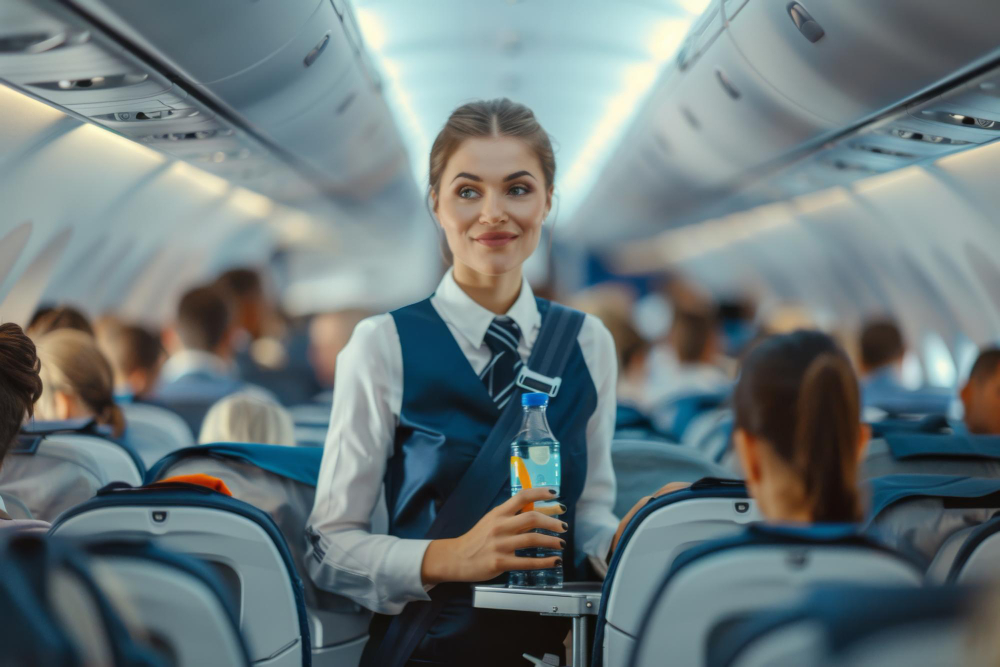
Claire Beaumont could tell which passengers would not sleep before they touched the seat controls.
Not always.
But often enough.
It was in the way they placed their bags.
The relaxed ones stored things casually. A jacket overhead. Shoes under the seat. Phone on the side console. They trusted the next seven hours to carry them.
The restless ones built small command centers.
Laptop within reach.
Phone charging.
Notebook out.
Pen uncapped.
Deck printed.
Glasses placed carefully.
Water accepted but not drunk.
Wine accepted but forgotten.
They smiled politely during boarding, but their eyes kept returning to a private place.
A meeting.
A number.
A person they had to disappoint.
A room they had to survive.
Claire had been a senior flight attendant for Air France for seventeen years.
New York to Paris was one of her regular routes.
AF007.
JFK to Charles de Gaulle.
An overnight flight that did something cruel to time: it took people out of one day, shortened their sleep, skipped the night, and delivered them into a European morning that expected them to be impressive.
Executives liked to call it efficient.
Claire called it expensive insomnia.
She had seen thousands of them.
Bankers, founders, lawyers, consultants, luxury executives, pharmaceutical leaders, media people, technology people, industrial people, people who said “transformation” too often, people who said “confidential” loudly enough for three rows to hear.
They arrived in the cabin wearing good shoes and tired faces.
Some were kind.
Some were invisible.
Some treated the crew like furniture with accents.
Some said thank you as if it still meant something.
Some slept before takeoff, which Claire considered a minor miracle.
Most pretended they would sleep after dinner.
They rarely did.
That evening, at JFK, the boarding began late.
A summer storm had moved through Queens earlier, leaving the runway lights shining against wet pavement. The aircraft smelled faintly of coffee, fabric, perfume, and the strange recycled anticipation of long-haul travel.
Claire stood near the forward galley greeting passengers.
“Bonsoir.”
“Good evening.”
“Bienvenue.”
“Welcome aboard.”
The business-class cabin filled slowly.
A woman in a cream coat, seat 3A, asked if the Wi-Fi would work over the Atlantic.
A man in 4D asked if the meal could be served quickly because he had “a lot to get through.”
A younger passenger in 6K took a photograph of the seat before sitting down. First time in business class, Claire guessed. He still had the delighted embarrassment of someone trying not to look delighted.
Then came seat 2L.
American. Mid-forties. Navy suit. No tie. Expensive backpack. Two phones. One laptop. One folder marked with a logo Claire did not recognize, though she recognized the type of folder.
Board folder.
He smiled when she greeted him.
Not fake.
Just incomplete.
“Good evening, monsieur.”
“Evening.”
“May I take your jacket?”
“Thank you.”
He handed it to her, then immediately checked his phone again before remembering there was nowhere for the message to go once the doors closed.
Claire had seen that gesture hundreds of times.
The last look before disconnection.
Some passengers looked relieved when airplane mode arrived.
Others looked like a court had ruled against them.
Seat 2L was the second kind.
His boarding pass said:
Marcus Hale
Claire did not know his title yet.
Titles had a way of revealing themselves.
Not through introductions.
Through behavior.
CEOs watched rooms even when sitting down.
CFOs kept documents neat.
CIOs had too many tabs open.
Lawyers asked questions that were not questions.
Consultants highlighted things.
Private equity people read silently and made everyone around them feel underprepared.
Marcus Hale, seat 2L, looked like someone carrying a decision nobody wanted to own.
After takeoff, the cabin settled.
New York fell away beneath them. The aircraft turned east, leaving the city’s lights behind like an argument paused but not resolved.
Claire moved through the aisle with another crew member, taking orders.
Seat 2L asked for still water, no wine, dinner after takeoff but “whenever convenient.”
People who said “whenever convenient” usually meant “now, but I am too polite to say it.”
At 3A, the woman in the cream coat was already on her laptop. Her screen showed a slide titled:
European Expansion: Revised Assumptions
At 4D, the man who wanted dinner quickly had opened a spreadsheet with more red numbers than green ones.
At 5A, a woman was reading a printed document and writing notes in the margin with the hard pressure of controlled anger.
At 2L, Marcus had opened a deck.
Claire saw the title when she placed his water down.
Board Discussion: AI Productivity and Cost Alignment
She did not mean to read.
Flight attendants read by accident.
You spend enough years placing glasses beside laptops at 38,000 feet and you learn the executive world in fragments.
Cost alignment.
Productivity target.
Post-restructure plan.
Operating leverage.
Transformation roadmap.
Regional delivery model.
Headcount optimization.
AI enablement.
Vendor rationalization.
Margin improvement.
Different passengers. Same words.
Claire had no MBA.
She did not need one to know when a phrase was trying to soften a wound.
Marcus looked up.
“Thank you.”
“You’re welcome.”
His phone, though offline now, remained beside the laptop like a sleeping animal he hoped would wake.
Claire moved on.
Dinner service began.
The forward cabin took on that strange business-class mood: curated comfort wrapped around private anxiety.
Linen.
Cutlery.
Warm bread.
Soft lighting.
Quiet voices.
Screens glowing with confidential things everyone pretended not to see.
Passengers made choices about beef, fish, chicken, vegetarian, cheese, dessert, coffee.
But beneath the meal, the real menu was always smaller.
Sleep or work.
Wine or clarity.
Truth or deck.
Most chose work.
Marcus ate three bites.
Then he pushed the tray slightly away and returned to his slides.
Claire passed again.
The title had changed.
AI Productivity Path to 15%
Then changed again twenty minutes later.
AI Productivity: Current Reality
Then again.
Where the Model Breaks
That one made her pause internally.
Not outwardly. Never outwardly.
But she noticed.
Some titles were decoration.
Some were confession.
Where the model breaks.
That sounded like confession.
A few rows behind him, 5A closed her document and pressed her fingers against her eyes. The printed page in front of her had a handwritten note at the top:
We cannot absorb this in Europe.
Claire had seen versions of that sentence before too.
Not always in those words.
Sometimes it was:
“London cannot own this.”
“Frankfurt needs governance.”
“Paris wants proof.”
“New York already committed.”
“Boston expects savings.”
“Warsaw has no capacity.”
“Bangalore can support, but not own.”
The cities changed.
The pattern did not.
North Atlantic flights were full of people carrying work from one side of the ocean to the other, hoping the distance would make it clearer.
It rarely did.
At 11:40 p.m. New York time, after the trays were cleared and the cabin lights dimmed, Claire prepared the galley for the long quiet stretch.
Quiet was never truly quiet.
There was always a hum.
Engines. Airflow. A lavatory door. Ice settling. Someone coughing. Someone shifting under a blanket. The tiny electronic chime of a call button, which in business class could mean anything from “I need water” to “I need emotional reassurance but will ask for tea.”
The call button at 2L lit up.
Claire walked over.
Marcus looked embarrassed.
“Sorry. Could I get coffee?”
She glanced at the time.
“Of course.”
Then, because she had been doing this long enough to know when kindness mattered more than policy, she added, “Long night?”
He gave a small laugh.
“Long year.”
She smiled.
“I hear that often.”
“I’m sure you do.”
She brought the coffee.
When she placed it down, he said, “Can I ask you something strange?”
Claire had learned that at altitude, “strange” questions were usually only honest ones.
“Of course.”
“Do people sleep on these flights?”
She looked around the cabin.
Some were asleep. Many were not.
“Some do.”
“And the others?”
“They negotiate with themselves until breakfast.”
For the first time, Marcus really smiled.
“That is exactly what I’m doing.”
Claire did not ask what about.
Crew were trained to be discreet. But discretion did not mean indifference.
She had watched marriages strain over tray tables, deals collapse before dessert, founders rehearse investor calls in whispers, lawyers rewrite agreements with trembling hands, executives cry silently into window reflections, and consultants make slides that no human being should have had to make at 2:00 a.m.
The cabin was full of stories people believed were hidden.
They were not hidden.
They were just unspoken.
Marcus looked back at his screen.
“I have to explain something tomorrow morning in Paris.”
“Something difficult?”
“Something obvious. Which is sometimes worse.”
Claire waited.
He did not continue immediately.
Then he said, “We told the board AI would improve productivity. We reduced headcount. We cut vendor spend. We promised Europe and North America could run more efficiently as one operating model.”
He stopped.
Claire said nothing.
He looked toward the dark window.
“The tools work. The people are good. The teams are exhausted. The numbers look better. The work is still stuck.”
There it was again.
The sentence beneath the sentence.
The work is still stuck.
Claire had heard executives describe this problem a hundred ways.
Capacity issue.
Operating drag.
Cross-functional misalignment.
Regional ownership gap.
Post-restructure execution risk.
Transformation fatigue.
AI adoption challenge.
But when stripped of slides, it usually became:
The work is still stuck.
Marcus looked suddenly aware that he was talking to a flight attendant and not a board advisor.
“I’m sorry,” he said. “That was probably more than you needed with a coffee request.”
Claire smiled.
“You would be surprised what travels in this cabin.”
He studied her for a second.
“What do you think?”
“About AI productivity?”
He laughed softly.
“Fair.”
Claire could have said something polite.
“I’m sure it will work out.”
“Tomorrow will be better.”
“At least you have coffee.”
Instead, perhaps because it was late, perhaps because the Atlantic made everyone a little less defended, she said:
“I think many people in this cabin are trying to make tomorrow believe something tonight does not.”
Marcus looked at her.
The sentence hung between them.
Claire wondered if she had gone too far.
Then he slowly closed his laptop halfway.
“That is… unfortunately accurate.”
She nodded once and returned to the galley.
Her colleague Émilie was organizing cups.
“You are doing therapy again?” Émilie asked in French.
“I gave coffee.”
“You gave philosophy with coffee.”
“Only a small portion.”
Émilie smiled.
“Business class should pay extra.”
Claire laughed quietly.
But she kept thinking about Marcus’s sentence.
The tools work.
The people are good.
The numbers look better.
The work is still stuck.
It was not her world, exactly.
But it was not foreign either.
Airlines understood work that looked simple from the outside and became impossible if ownership broke.
A passenger sees a flight.
The system sees aircraft rotation, crew legality, weather, maintenance, catering, security, customs, baggage, boarding, cleaning, fueling, dispatch, air traffic control, passenger connections, special meals, medical needs, missing paperwork, late inbound aircraft, and one person in seat 14C who insists their bag absolutely fits when physics has already resigned.
A flight lands on time not because one person is excellent.
It lands because the work moves.
Because ownership is clear.
Because handoffs are known.
Because exceptions have paths.
Because timing matters.
Because if one function pretends the next function will “figure it out,” the delay becomes visible to everyone.
Perhaps companies were not so different.
Perhaps their board decks were just boarding announcements with larger consequences.
At 1:15 a.m. New York time, most of the cabin had finally gone dark.
Marcus had not slept.
Neither had 3A.
Nor 5A.
Nor the man at 4D, who had surrendered his spreadsheet only to stare at the ceiling as if the numbers had moved there.
Claire moved quietly through the aisle offering water.
At 5A, the woman with the printed document stopped her.
“Could I have some tea?”
“Of course.”
When Claire returned, the woman said, “Do you ever get used to overnight flights?”
“Physically or emotionally?”
The woman blinked, then smiled.
“Both.”
“Physically, somewhat. Emotionally, people bring different weather.”
“I like that.”
The woman took the tea.
Her document was turned over now, but the note Claire had seen earlier remained in her mind.
We cannot absorb this in Europe.
The woman noticed Claire’s glance toward the paper, not accusingly.
“It’s not classified,” she said. “Just depressing.”
Claire said, “Those often travel together.”
The woman laughed.
“I work in Paris operations for a company headquartered in New York. They made promises in the US. They want Europe to deliver them. We lost people last month. Now there is an AI initiative that is supposed to make the math work.”
She stirred the tea though there was nothing in it.
“Everyone says the future is global. But somehow the burden always lands locally.”
Claire repeated the sentence silently.
The burden lands locally.
That was another one.
She wished she had a notebook.
Maybe she should start one.
A notebook of things people said when the cabin lights were low and there was no more room in the deck for truth.
At 2:00 a.m., somewhere over the Atlantic, Claire stood in the galley and wrote on a napkin.
Not because she was a writer.
Because the sentence would not leave her.
The promise crosses the ocean. The burden lands locally.
She folded the napkin and placed it in her apron pocket.
Then the turbulence started.
Not severe.
Just enough.
A few bumps. A small drop. The seatbelt sign came on. The cabin stirred. Someone gasped softly. Someone else laughed too loudly to prove they were not worried.
Claire checked the aisles.
Everyone was fine.
But the turbulence had woken the cabin’s anxiety.
Marcus opened his eyes, though he had not been sleeping.
The woman in 5A grabbed her armrest.
The man in 4D looked annoyed, as if the atmosphere should have scheduled the disruption.
Claire had always found turbulence clarifying.
For a few minutes, the hierarchy disappeared.
CEOs, interns, heirs, consultants, ministers, athletes, children, crew — everyone became a body in a machine moving through invisible forces.
The important people were no longer important enough to negotiate with gravity.
That did not make them less human.
It made them more so.
When the bumps eased, Marcus pressed the call button again.
Claire returned.
“Everything okay?”
“Yes,” he said. “Could I have water?”
She brought it.
He looked different now.
Less polished.
Maybe turbulence had shaken something loose.
“I keep thinking about what you said.”
Claire waited.
“Trying to make tomorrow believe something tonight does not.”
She gave a small shrug.
“Cabin wisdom.”
“No,” he said. “Operating truth.”
He opened the laptop again, but this time he did not return to the deck.
He opened a blank slide.
Claire could see the title from where she stood.
What We Know Tonight
Under it, he typed:
-
AI tools are working in controlled workflows
-
Productivity is not visible at operating level
-
Remaining teams are overloaded
-
Europe is absorbing commitments made in North America
-
Ownership across regions is unclear
-
Current model depends on local heroics
-
The next step is work redesign, not another productivity claim
He stopped typing.
Then added:
-
Do not sell the board a number the operating model cannot yet earn
Claire felt, unexpectedly, proud of him.
This was absurd.
She did not know him.
He might still go to Paris and ignore his own slide.
People often betrayed themselves after landing.
But for now, at least, the truth had entered the deck.
That was something.
Breakfast began too soon.
It always did on eastbound flights.
One moment the cabin was dark and private. The next, lights rose, trays appeared, and everyone had to become a person again.
Business travelers woke into their roles.
Jackets. Shoes. Watches. Phones. Faces.
The young passenger in 6K opened his shade and smiled at the first light over France.
Claire liked him.
He had slept almost the whole way.
A rare talent.
Marcus did not look rested.
But he looked clearer.
At 5A, the Paris operations woman was reviewing her document again. At the top she had crossed out one sentence and written another.
Claire could not help seeing it.
Original:
Europe cannot absorb this.
New:
We need to redesign how commitments move from New York to Europe.
Better.
Less wounded.
More dangerous.
At 4D, the spreadsheet man finally drank water.
A breakthrough, of sorts.
The aircraft began its descent into Paris.
Clouds appeared below, then broke into fields, roads, towns, morning traffic, the outskirts of a city already tired before the workday began.
Claire walked through the cabin for final checks.
Seat backs.
Tray tables.
Belts.
Bags.
Headphones.
Forgotten chargers.
Forgotten dignity.
At 2L, Marcus closed his laptop.
“Thank you for the coffee,” he said.
“And the philosophy?”
“That too.”
He hesitated.
Then he said, “You know, you probably understand executive travel better than most executives.”
Claire smiled.
“No. I understand cabins.”
“Same thing sometimes.”
Maybe.
Not always.
But sometimes.
The wheels touched down at Charles de Gaulle.
A small collective release moved through the cabin.
Passengers checked phones before the aircraft had fully slowed, as if reality might punish them for waiting.
Messages arrived.
Meetings restarted.
The Atlantic disappeared behind them as if it had not held their secrets for seven hours.
At the door, Claire said goodbye to each passenger.
“Merci.”
“Au revoir.”
“Have a good day.”
“Bon courage.”
She said that last one more often to business travelers.
Good courage.
Better than good luck.
Luck was too passive for what waited outside the jet bridge.
Marcus stopped briefly before leaving.
“I changed the deck,” he said.
“I hope for the better.”
“For the truer.”
“That is usually better.”
He nodded and stepped into the jet bridge, carrying his bag, his laptop, and one less convenient story than the one he had boarded with.
The woman from 5A followed.
Then the spreadsheet man.
Then the young passenger in 6K, who thanked everyone with the wide smile of someone whose company had paid for his seat but not yet his cynicism.
Soon the cabin was empty.
Empty cabins after long flights were always strange.
For seven hours, they held fear, sleep, wine, pressure, ambition, irritation, secrets, perfume, socks, bad decisions, better decisions, and occasionally small moments of grace.
Then everyone left, and only crumbs remained.
Claire walked through the aisle with the crew, checking seats.
At 2L, she found nothing.
At 5A, she found a pen.
At 4D, a napkin with numbers on it.
At 6K, a chocolate wrapper tucked carefully into the seat pocket, because some people were raised well.
In the galley, Émilie handed her a trash bag.
“Your therapy clients survived?”
“Barely.”
“Good. Paris needs them conscious.”
Claire reached into her apron pocket and found the napkin she had written on during the flight.
The promise crosses the ocean. The burden lands locally.
She looked at it for a moment.
Then, beneath it, she added another line.
The cabin knows before the board.
That was the thing.
The board would hear the update at 10:00.
Paris operations would hear the consequences at 11:30.
Finance would ask for the number by noon.
The AI team would show the demo again next week.
Someone in New York would say the company needed more urgency.
Someone in Europe would say the team needed more capacity.
Someone would suggest another tool.
Someone would suggest a vendor.
Someone would suggest a hiring plan that finance would reject.
Someone would say “ownership” and everyone would nod until it threatened their function.
And somewhere, in another cabin, on another North Atlantic flight, another executive would open another deck and try to make tomorrow believe something tonight did not.
Claire folded the napkin and placed it inside her own small notebook.
She had bought the notebook months ago at a shop near the Seine and never used it. The cover was dark blue. Almost black.
On the first page, she wrote:
Things Leaders Say Before Landing
Then she copied the two lines.
The promise crosses the ocean. The burden lands locally.
The cabin knows before the board.
She closed the notebook.
The cleaning crew entered. The aircraft would be turned around. New passengers would board. New meals would be loaded. New bags would fill the bins. New promises would cross the ocean.
Claire looked once more down the empty business-class aisle.
Comfortable seats. Beautiful service. Perfect lighting.
A place designed for rest, filled every night with people who could not sleep.
That was the pattern.
Not because the seats were bad.
Because the work was badly designed.
And until companies learned to redesign how work moved, the North Atlantic would remain full of sleepless people carrying promises their operating models could not land.
Was this useful?
A quick reaction helps us shape the next issue.Thanks for the reaction —
More from the briefing

You'd Have Done the Same
When a storm shuts New York, a hard, successful man flying to the deal of his life is ordered down to a small town in Newfoundland called Gander, and taken in by strangers who want nothing at all.
Cabin Pressure
On AC856, the every-other-Tuesday red-eye from Toronto to London, two frequent flyers who have shared the same cabin for three years and never spoken finally do, and each discovers the composed stranger they envied was drowning too.

The Point of No Return
On UA16, the red-eye from Newark to London, a woman who has crossed this ocean six hundred times watches a young colleague take her first-ever transatlantic flight, and does the math on a life spent living in the middle of the sea.