Pricing RAMP For Talent
Login Free Trial
Orca Security ★ 4.7 · 314 reviews
Schedule Meeting
Marketplace › Security › Orca Security  · Orca Security alternatives

Orca Security

One Platform to Secure Cloud and AI. Agentic AI to Scale with Confidence.

AiDOOS Verified SAAS Security
4.7 ★★★★☆ 314 reviews
Live in 72 hours Free trial : :
Pricing
Tailored to you
AiDOOS generates your proposal instantly — scoped & ready in seconds
Schedule Meeting

Free trial · No credit card required

Category
Security
Deployment
Cloud (SaaS)
API Access
Yes
AiDOOS Deploy
72 hours

About Orca Security

Orca Security is an AI-powered cloud security platform that provides a comprehensive CNAPP (Cloud Native Application Protection Platform) solution. It offers agentless visibility across cloud environments, including AWS, Azure, and Google Cloud, identifying vulnerabilities, misconfigurations, secrets, and runtime threats. The platform unifies cloud security posture management, data security, workload protection, identity management, and AI security in a single view. Orca's context-aware risk prioritization helps security teams focus on the issues that matter most, reducing alert fatigue. It also provides AI inventory management, discovering all AI models, packages, and agents running across the cloud, including shadow AI. With features like attack path analysis and integration with developer workflows, Orca enhances security throughout the SDLC. AiDOOS enhances deployment and adoption by providing a centralized platform for managing cloud security tools, automating workflows, and enabling seamless integration with existing tech stacks. AiDOOS ensures that Orca's capabilities are fully leveraged, reducing operational overhead and ensuring rapid time-to-value.

Challenges It Solves

  • Siloed security tools and alert fatigue hamper efficient threat detection and response.
  • Poor visibility and contextual understanding of cloud environments create blind spots.
  • Manual and time-consuming compliance audit processes slow down security operations.
  • Complexity of securing AI-generated code and shadow AI usage.

Screenshots
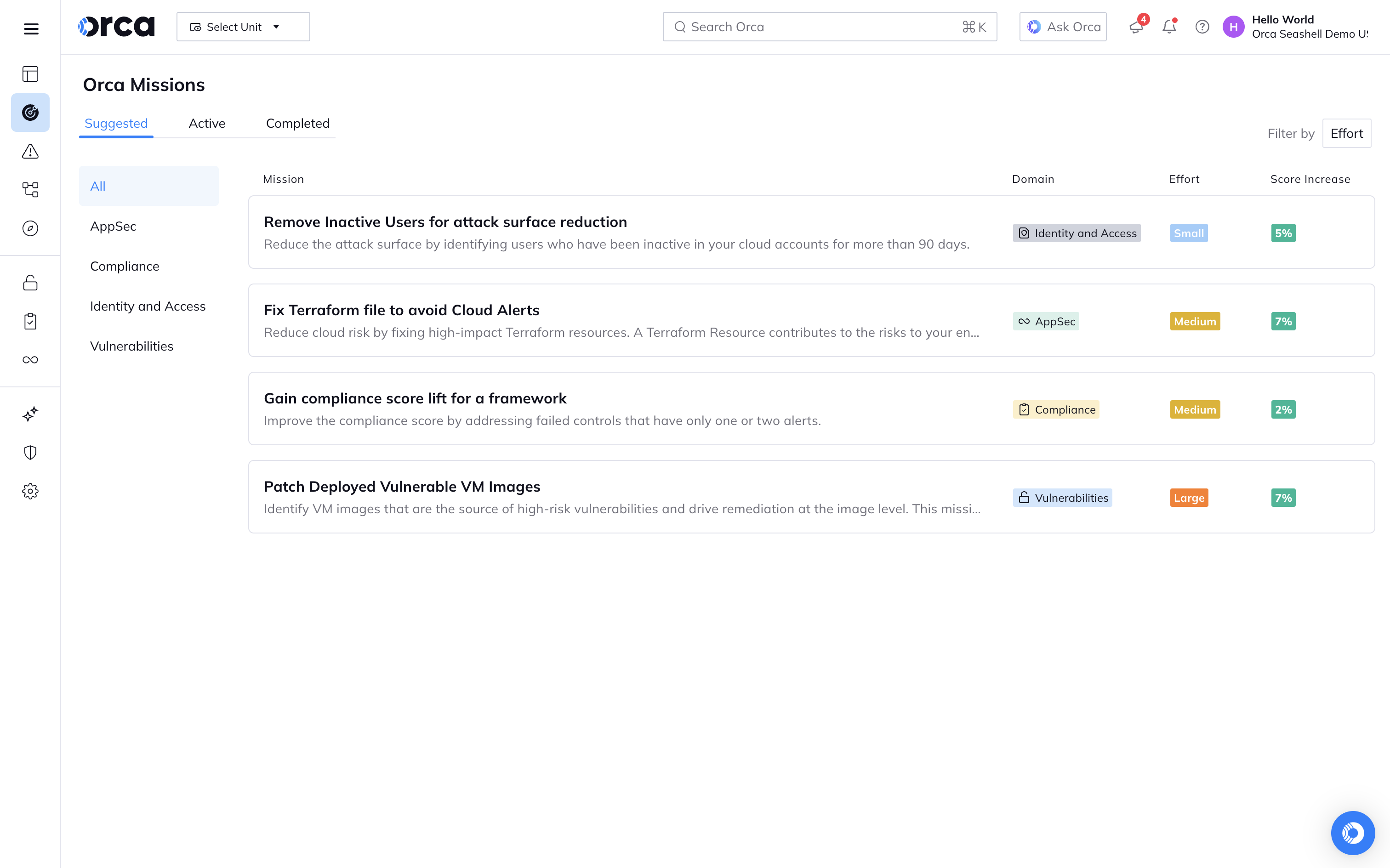
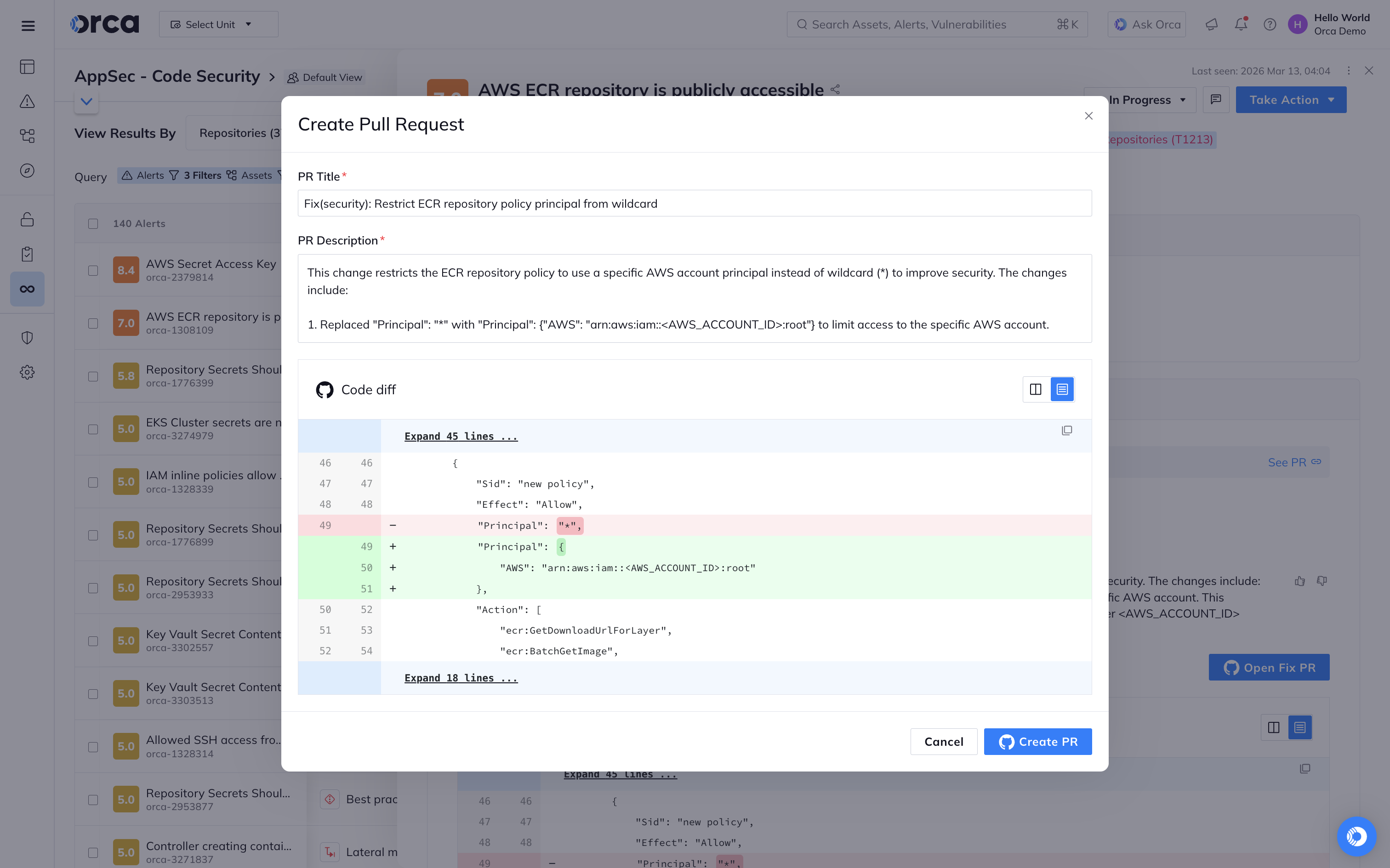
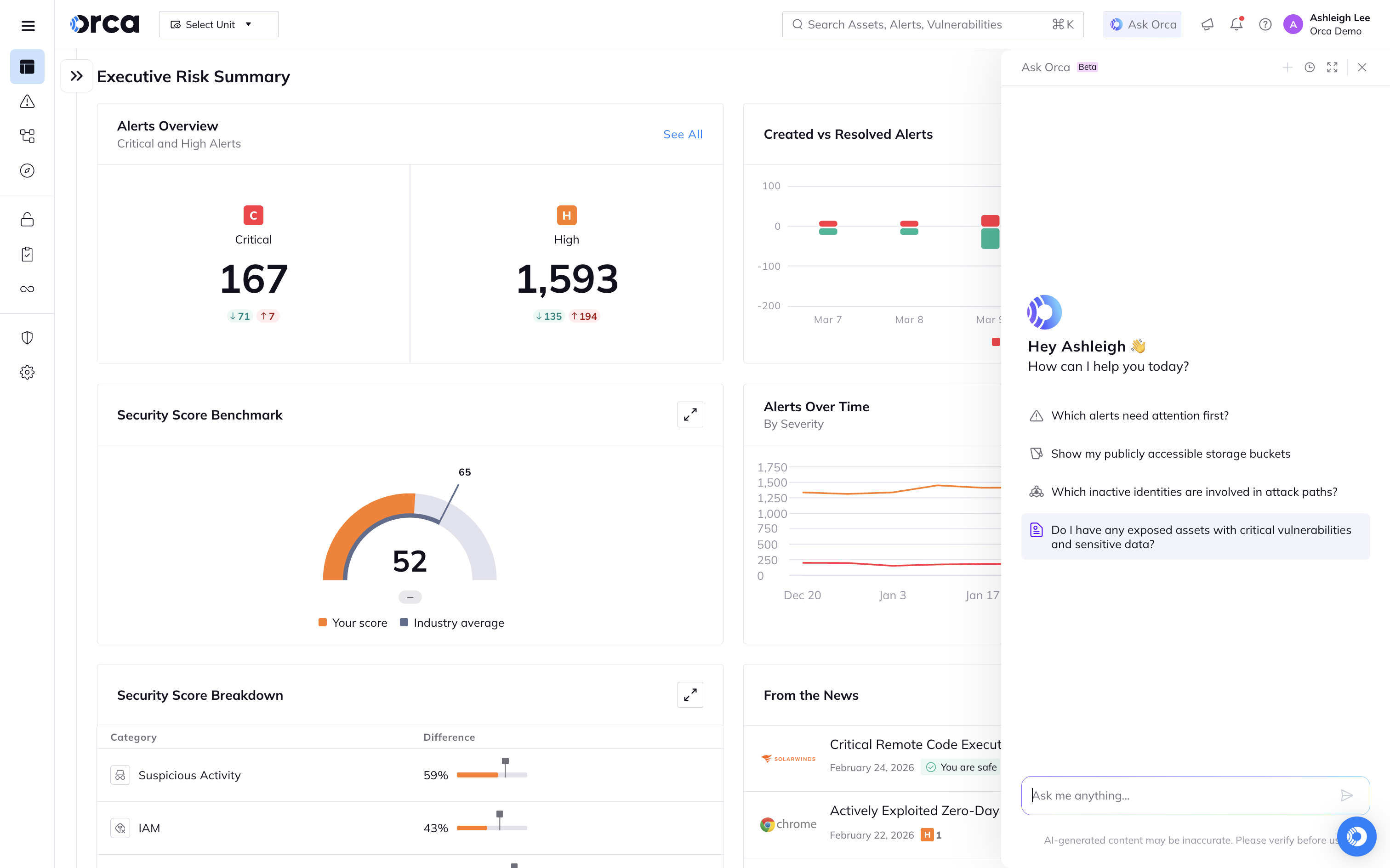
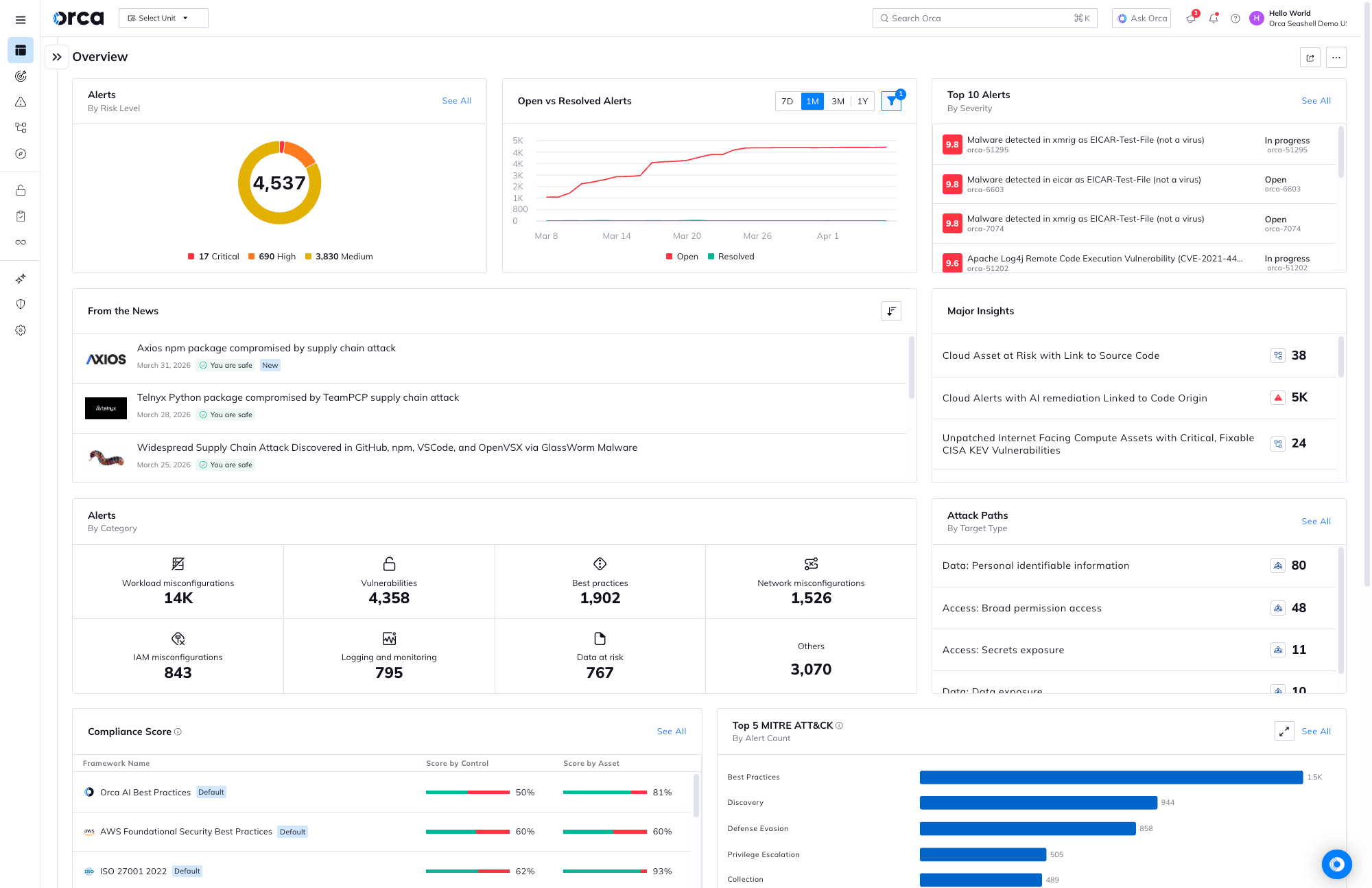
Orca Security screenshot 1
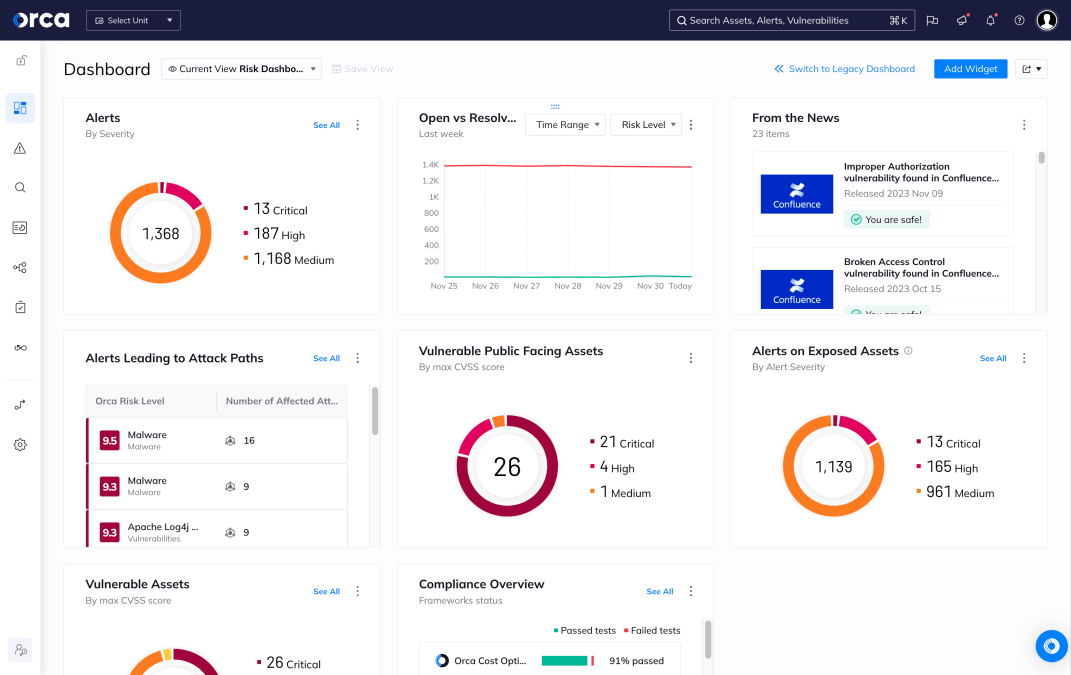
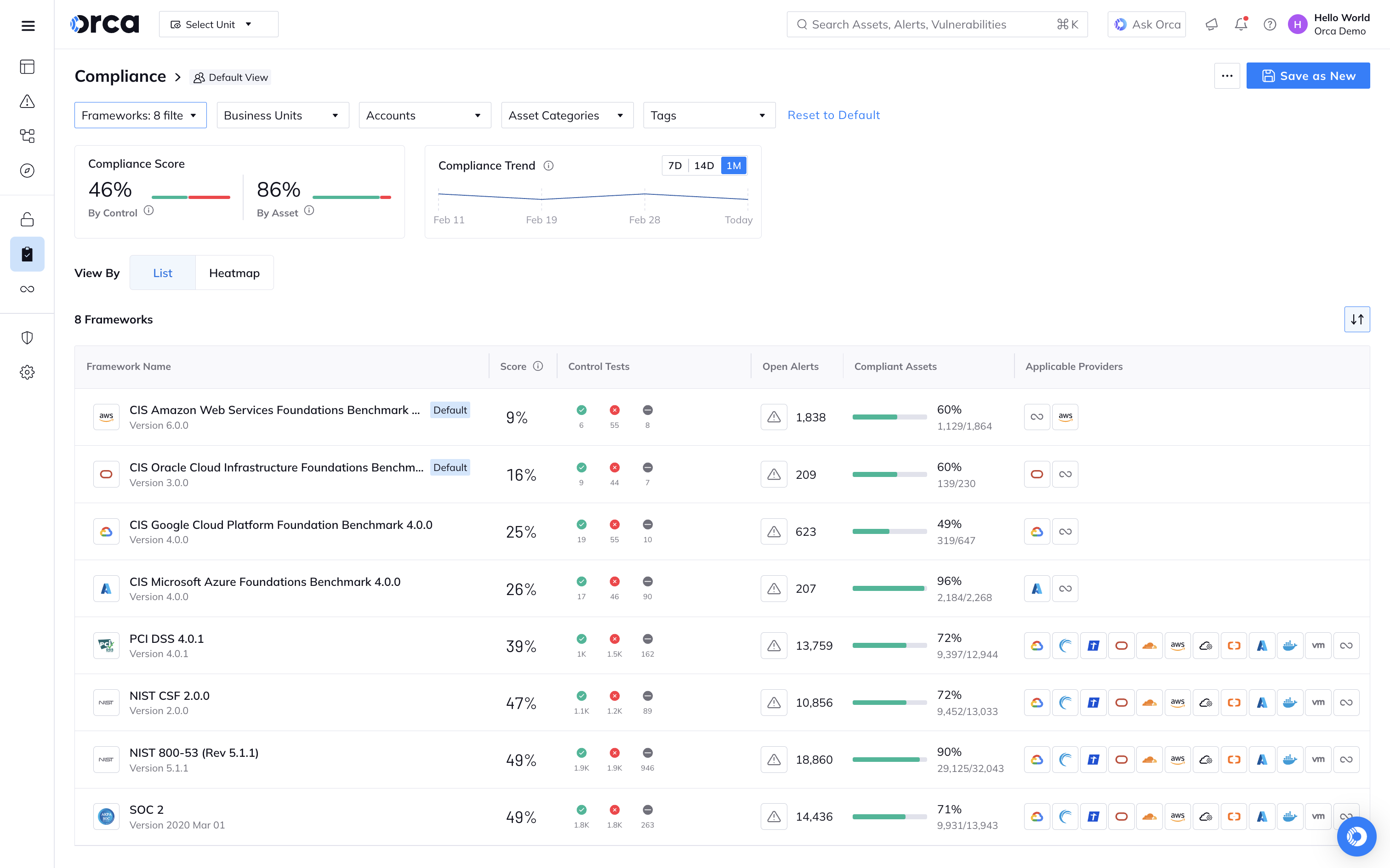
Orca Security screenshot 1 Orca Security screenshot 2 Orca Security screenshot 3 Orca Security screenshot 4 Orca Security screenshot 5 Orca Security screenshot 6 Orca Security screenshot 7 Orca Security screenshot 8

Use Cases

Multi-Cloud Security Posture Management

Unify security across AWS, Azure, and Google Cloud to reduce misconfigurations and enforce policies.

DevOps and Code Security

Integrate security into the SDLC to scan code, dependencies, and infrastructure for exploitable risks.

AI Risk Management

Discover and secure AI workloads, models, and agents to prevent shadow AI exposure.

Regulatory Compliance and Audits

Automate compliance checks and easily demonstrate ATO for government and industry regulations.

Pricing

Custom pricing — built for your team

Orca Security pricing is tailored to your organisation's size, integrations, and requirements. AiDOOS generates your proposal instantly — scoped & ready in seconds.

Schedule a Meeting
Free trial available — No credit card required. Full access to all features.
💡 Pricing insight from reviewers: Orca Security is generally positioned as a premium-priced solution, with pricing customized based on cloud assets and usage.

Key Features

SideScanning

Agentless, comprehensive cloud asset visibility without performance impact.

Cloud Security Posture Management

Identify and remediate misconfigurations across multi-cloud environments.

Context-Aware Risk Prioritization

Correlates risks with actual exploitability to focus on critical issues first.

AI Security and Inventory

Discover and secure every AI model, package, and agent running across your cloud.

Attack Path Analysis

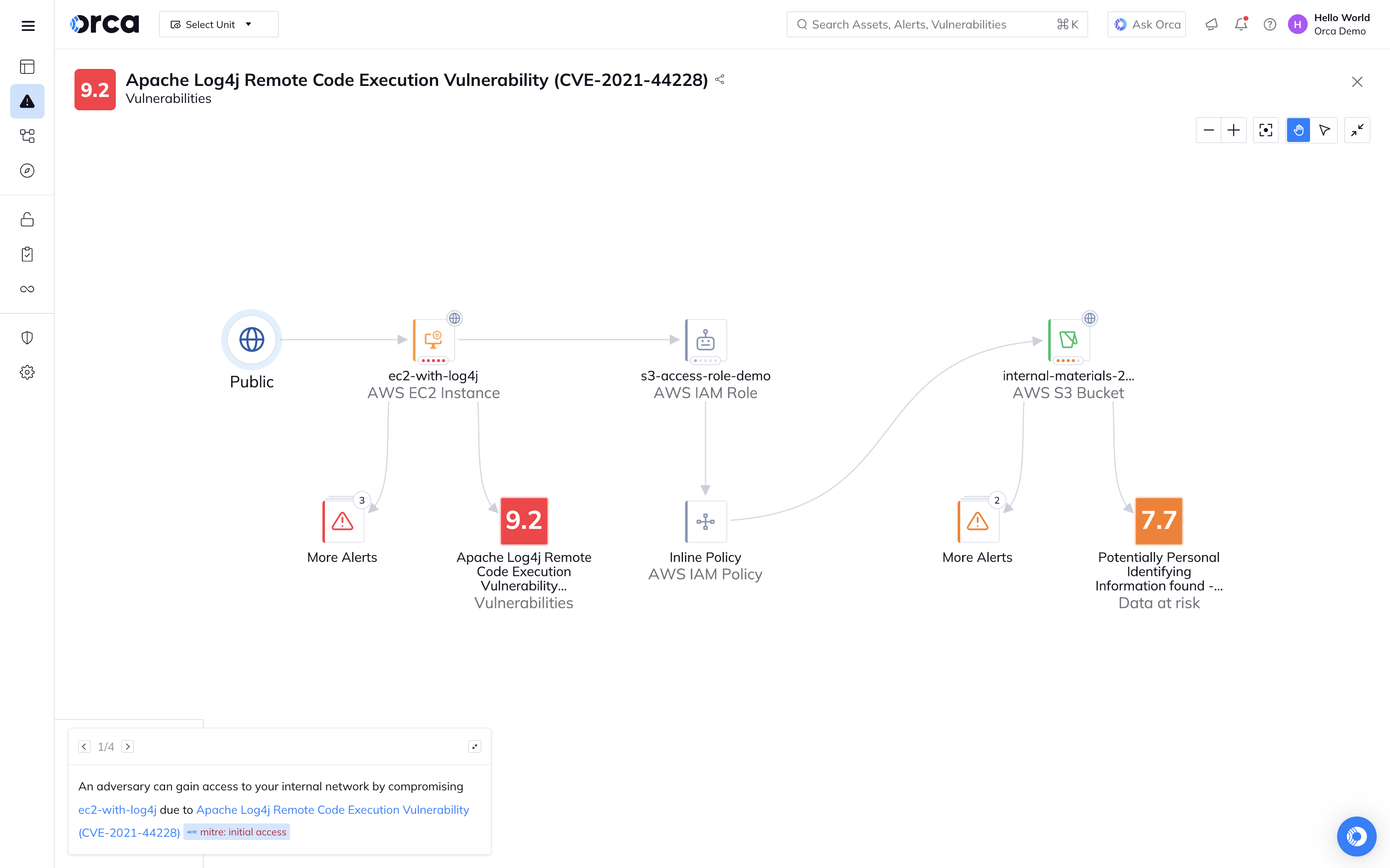
Visualizes critical paths from exposed resources to sensitive data for strategic remediation.

Compliance and Reporting

Automates compliance checks and provides audit-ready reports for major frameworks.

What Reviewers Say AI-synthesized from 314 reviews

What works well

  • Agentless technology ensures complete visibility without impacting performance.
  • Context-aware risk prioritization reduces alert fatigue.
  • Comprehensive AI security capabilities.

Common concerns

  • Limited integration with certain third-party tools may require custom work.
  • Pricing is not transparently listed and requires custom quote.

Reviews

314 verified reviews
4.7
★★★★☆
out of 5 · 314 reviews
By segment
Enterprise59%
Mid-Market41%
E
Enterprise (> 1000 emp.)
"Orca Catches Hidden Exposure from AI Agent-Driven Feature Experiments"
Our product team constantly runs experiments, turning features on and off with flags that are increasingly evaluated or executed by AI agents. Orca doesn't try to live in the feature-flag layer; instead, it watches the underlying cloud identity and the agent posture. When an experiment gives an agent broader access than intended, or opens up a test path to sensitive data, Orca picks it up on its next assessment of the cloud and agent surface and flags it. Developers don't have to change how they ship experiments, but security can still see where agent-driven flags might create unexpected exposure. Explaining to some product folks why the temporary agent-powered experiments still need proper access controls took a few rounds of education, even with Orca's findings on hand. It keeps up with experimentation-heavy, agent-driven development without slowing it down. Orca watches the surfaces where risk actually materializes—when agents toggle, evaluate, or act on feature flags.
E
Enterprise (> 1000 emp.)
"Orca Brings AI Agent Risk into Clear Business Context"
Our finance and enterprise risk teams wanted to understand AI agent risk in business terms, not just issue counts or a vague idea of 'agent exposure.' Orca's context—what data an agent can touch, whether it can reach internet-facing services, and which identities and systems sit behind its paths—lets us group agent-driven risks around business-critical assets and regulated workflows. It's not a full quantitative risk engine, but it has given us a structured way to discuss which agent behaviors matter most to revenue, compliance, and our contractual obligations. We still add some business mapping on our side for certain agent-centric technical risks, so they line up neatly with revenue streams and contractual exposure. It has moved our security discussions with Finance and Enterprise Risk from 'here is a pile of agent findings' to 'here are the top agent-driven threats to the system' that actually drive cost and compliance exposure.
E
Enterprise (> 1000 emp.)
"Orca Clarified Sensitive Data Exposure and AI Agent Access Paths"
Orca gave us a much clearer picture of where sensitive data actually lives in relation to our AI agents. It surfaced PII in storage, secrets in places agents might read, and old database snapshots sitting in accounts that newly created agents could access. The real value is the context: each finding shows what the data is, whether it's exposed, and which agents and identities can access it. That turned what could have been an overwhelming inventory into a clear, prioritized list of data our agents should never be able to touch, along with the paths we needed to close. We spent a bit of time upfront tuning the data classification and agent reachability settings to align with our own definitions of sensitive information, as well as the agent access paths we consider unacceptable. It folds data security into the same agent-aware risk picture as misconfigurations and identities, so 'where is our sensitive data, and which agents can reach it?' is finally a question we can answer continuously.
E
Enterprise (> 1000 emp.)
"Orca Delivers a True Shift-Left Win for IaC and Pipeline Security"
Having Orca scan our infrastructure as code and our pipelines has been a real shift-left win for the AI agents. We started catching templates and configuration snippets that would have given agents broad, long-lived permissions or exposed new agent endpoints before any of those changes deployed. Because Orca ties these IaC findings back to the same risk model it uses for the running environment, we can clearly see that a misconfiguration flagged in code is the same kind of agent exposure we'd otherwise be chasing down in production later. We worked closely with our platform team to integrate agent-focused checks cleanly into our build steps, and to decide which misconfigurations should trigger a warning versus block a deployment. It shifts cloud and agent security left in a way that actually sticks. We're catching reachable, exploitable agent misconfigurations during code review instead of after agents are already live and exposed, which has made the whole pipeline safer without adding friction.
E
Enterprise (> 1000 emp.)
"Orca Surfaced Agent-Reachable Secrets Fast with Clear Context and Minimal Noise"
We had a general feeling that credentials and secrets were scattered around our environment, but we didn't have a clear map of which ones agents could actually access. Orca revealed hardcoded API keys, SSH private keys, and database credentials in places agents or their tools might read—config files, storage buckets, and logs. It doesn't just pattern-match; it uses entropy and the surrounding context to decide if a string is genuinely a secret, which reduces noise. Seeing each secret in the context of agent reachability made it clear which exposures could be triggered by agents and needed urgent cleanup. We spent some time defining suppression rules for test credentials in our sandboxes, so that agent-relevant secrets stayed prominent in the findings. It turned secret sprawl from an abstract concern into a concrete, prioritized cleanup list, with a special focus on secrets that AI agents could stumble over. Exposed credentials are now a tracked, agent-aware risk rather than something we'd get to eventually.
E
Enterprise (> 1000 emp.)
"Orca Found Hidden Malware and Suspicious Workflows Our Other Tools Missed"
Orca flagged malicious files and suspicious workflows across our workloads that our other tools hadn't detected, including cases where an abused AI agent could have been used to plant or trigger malware. It goes beyond simple hash matching, catching things like cryptominers and web shells that agents might deploy or invoke as part of a compromised toolchain. Because scanning happens off the workload at the storage and configuration layer, there's nothing for malware to hide from on the box itself, and it also covers hosts and agent-linked paths we never would have pointed a dedicated scanner at. We aligned Orca's agent-aware malware and threat findings with our existing endpoint response processes, which helped us fold that context smoothly into how the team already works. It gave us malware and abuse visibility across our cloud workloads and the agent paths that were previously blind spots. We can see not just that malware exists, but how AI agents could be used to deploy or spread it, and then cut those routes off.
E
Enterprise (> 1000 emp.)
"Orca's Attack Path View Revolutionized How We Prioritize Fixes"
The game-changer for us is the attack path view. Instead of a list of isolated findings, Orca shows the complete chain: an exposed asset, the vulnerability on it, the identity it can assume, and the sensitive data at the end. Seeing the entire route makes it obvious which single fix can break the chain, so we stopped trying to patch everything and focused on cutting the links that matter most. In a large environment, the attack path graphs can be dense, so we found it best to scope to our crown jewel assets first. Once we did that, the overall picture became clear and useful. It moved us from just counting vulnerabilities to reasoning about exploitable routes, which is a much better use of a small team's time. It's especially valuable when AI agents are part of the route, because we can see how agents access identities and how data paths fit into the real chain an attacker could follow. As a result, we fix fewer things, but we reduce more actual risk.
E
Enterprise (> 1000 emp.)
"Orca Provided Fast Visibility into AI Agent Risks"
Our company operates at high speed. Developers, analysts, and PMs are constantly releasing, and AI agents are embedded in many of those processes. We needed visibility that could match that momentum—not a sluggish rollout that would still be unfinished by the time the next agent launched. Orca connected to our cloud account, and within days we had a real risk picture, including the AI agents: the identities they operate under, the endpoints they expose, and the data they can reach. We didn't have to chase teams to get a clear view of our agent services. The main follow-up was organizing the findings to reflect our team and business unit structure, including grouping agents by owner and function. That organizational step has made ongoing reviews much clearer for leadership. This removed the typical deployment obstacle and gave us AI agent visibility before we could even finish planning the rollout. That speed matters even more as agents and their workflows spread across the state, because they become visible and manageable as quickly as teams create them.
E
Enterprise (> 1000 emp.)
"Orca's Exposure Context Makes Prioritizing Host Vulnerabilities Simple"
Everyone talks about containers these days, but we still have plenty of VMs and long-running hosts, and our old scanning was weakest there. Orca treats them the same as everything else, showing which host vulnerabilities are on internet-facing machines, which are connected to privileged identities, and which are actually reachable versus protected by existing controls. That extra context lets us prioritize host patching based on real exposure rather than just CVSS scores. Some of the older hosts had the usual configurations that needed a second look, but the findings were solid, and the added context made them easy to understand. It filled the gap between modern container coverage and our older VM estate. Now host risk is prioritized based on actual exposure, not just severity numbers. It also helps us see when host and VM risk might affect the infrastructure supporting AI agents or the systems those agents rely on.
E
Enterprise (> 1000 emp.)
"Orca Exposes Shadow Data Risks with Straightforward Sensitive Data Discovery"
We kept running into the issue of production data being duplicated into staging and development environments that weren't as tightly controlled, along with storage we didn't even recall setting up. Orca identifies sensitive information across managed, unmanaged, and shadow repositories, including files on VMs, containers, and buckets, and sorts it into groups such as PII and payment details. Spotting a forgotten production snapshot in a loosely managed dev account and seeing how that connection highlighted the account's exposure made it clear which copies were actually dangerous versus harmless. We had to fine-tune things a bit to separate intentional copies from risky ones, since some lower-environment data was supposed to be there. Still, setting it up to fit our workflows was quick. It offers genuine insight into sensitive data sprawl, including shadow and misplaced data, so the divide between secure production and less-protected accounts no longer hides as an invisible threat. It also points out where AI agents might stumble onto sensitive data they shouldn't access, turning those risky paths into concrete action items.

Reviewer Demographics

Top Industries

No data available

Enterprise Readiness

FedRAMP Moderate
GovRAMP
ISO 27001
SOC 2

Identity & Access

SSO Okta, Azure AD
RBAC Role-based access controls with custom roles
Audit Logs 90-day retention

Data Security

At restAES-256
In transitTLS 1.3
Key mgmtVendor-managed

SLA & Availability

Uptime SLA99.9%
RPO
RTO
Pen test

Compliance & Portability

Data residencyUS, EU
Data export CSV, JSON
Right to erasure✓ Supported

Integrations

AWS

Orca integrates with AWS to provide agentless cloud security posture management, vulnerability scanning, and compliance checks.

Native < 1 hour ⇄ Bi-directional ⚡ AiDOOS Pre-wired

Azure

Orca integrates with Microsoft Azure to deliver comprehensive cloud security and compliance monitoring.

Native < 1 hour ⇄ Bi-directional ⚡ AiDOOS Pre-wired

Google Cloud

Orca integrates with Google Cloud Platform (GCP) to provide continuous security visibility and risk assessment.

Native < 1 hour ⇄ Bi-directional ⚡ AiDOOS Pre-wired

Slack

Orca provides a Slack integration to receive security alerts and collaborate with experts directly.

Native < 1 hour

Claude

Orca integrates with Claude's Compliance API to enhance AI-powered security analytics and reporting.

Native 1-2 hours ⇄ Bi-directional

Jira

Orca can create and manage Jira tickets for prioritized security issues to streamline remediation workflows.

Third_Party 1-2 hours ⇄ Bi-directional ⚡ AiDOOS Pre-wired

ServiceNow

Orca integrates with ServiceNow for incident management and asset inventory synchronization.

Third_Party 1-2 hours ⇄ Bi-directional

Okta

Orca supports Okta for single sign-on and identity governance, ensuring secure access control.

Third_Party < 1 hour ⚡ AiDOOS Pre-wired

Governance & Compliance

EU AI Act

No data available

Data Processing Agreement

Standard Contractual Clauses DPA available

Sub-processors

Fully disclosed

Right to Erasure

✓ Supported

Change Notifications

No data available

NIST AI RMF

No data available

AiDOOS Managed Deployment

Deploy Orca Security in 72 hours

AiDOOS handles setup, CRM integration, SSO config, and user provisioning. Your team goes live — not your IT department.

12
Deployments
94%
Adoption rate
4.8/5
Post-deploy sat.
1-2 weeks
Time to value

Prerequisites

  • Cloud account with API access (AWS, Azure, or GCP)
  • Admin permissions to configure integrations
  • Valid Orca Security license

Configuration Options

  • Choose cloud providers to connect
  • Set up Slack alerts for real-time notifications
  • Define custom compliance frameworks

How Orca Security Compares

Product AI & Analytics Ease of Use Enterprise Features Pricing Integrations Mobile Experience Quick Setup Customer Support Rating Price/mo
Orca Security This product
Excellent Excellent Excellent Good Good Fair Excellent Good ★ 4.7 $Custom/user
Wiz
Good Good Good Fair Good Poor Good Good $Custom/user
Prisma Cloud
Good Good Excellent Fair Excellent Poor Good Good $Custom/user
Lacework
Good Good Good Fair Good Poor Good Good $Custom/user
Virtual Delivery Center · A new delivery category

A Virtual Delivery Center for Orca Security

Pre-vetted experts and AI agents in the loop, assembled as a delivery pod. Pay in Delivery Units — universal pricing across roles, seniority, and tech stacks. No hiring, no contracting, no procurement cycle.

  • Plans from $2,000 — Starter Pack, 10 Delivery Units, 90 days
  • Refundable on unused Delivery Units, anytime — no questions asked
  • Re-delivery guarantee on acceptance miss
  • Pre-flight delivery sizing — you see the plan before you commit

How a Virtual Delivery Center delivers Orca Security

Outcome-based delivery via AiDOOS’s VDC model.  Why VDC vs traditional consulting? →

Outcome-Based

Pay for results, not hours

Milestone-Driven

Clear deliverables at each phase

Expert Network

Access to certified specialists

Implementation Timeline

1
Discover
Requirements & assessment
2
Integrate
Setup & data migration
3
Validate
Testing & security audit
4
Rollout
Deployment & training
5
Optimize
Performance tuning
Schedule a Meeting

Frequently Asked Questions

How does Orca Security provide agentless cloud security?
Orca uses patented SideScanning technology to analyze cloud workloads without installing agents, offering comprehensive visibility in minutes.
Which cloud providers does Orca support?
Orca supports AWS, Microsoft Azure, and Google Cloud Platform for cloud security posture management and compliance.
Does Orca Security support government compliance?
Yes, Orca is FedRAMP Moderate and GovRAMP authorized, and supports frameworks like NIST SP 800-53, NIST CSF, DISA STIG, and ISO 27001.
Can Orca Security integrate with existing DevOps workflows?
Yes, Orca integrates with Jira and ServiceNow to streamline remediation, and offers APIs for custom automation.
How does Orca prioritize security risks?
Orca uses contextual risk scoring that considers severity, accessibility, exploitability, and business impact to help teams focus on the most critical issues.
What makes Orca Security different from other CNAPP solutions?
Orca's agentless approach, unified data model, and AI-powered context set it apart, enabling rapid deployment and full visibility without performance impact.

Quick Stats

★ 4.7
Rating
12
Deployments
72 hours
Live in
99.9%
Uptime SLA
Deployment Complexity
Easy (2/5)
Schedule a Meeting

Vendor

Orca Security
Founded 2019 · 500-1000 employees · Portland, Oregon
Verified Vendor

Get an Instant Proposal

You'll get a structured implementation plan — scope, timeline, and cost — in seconds.