
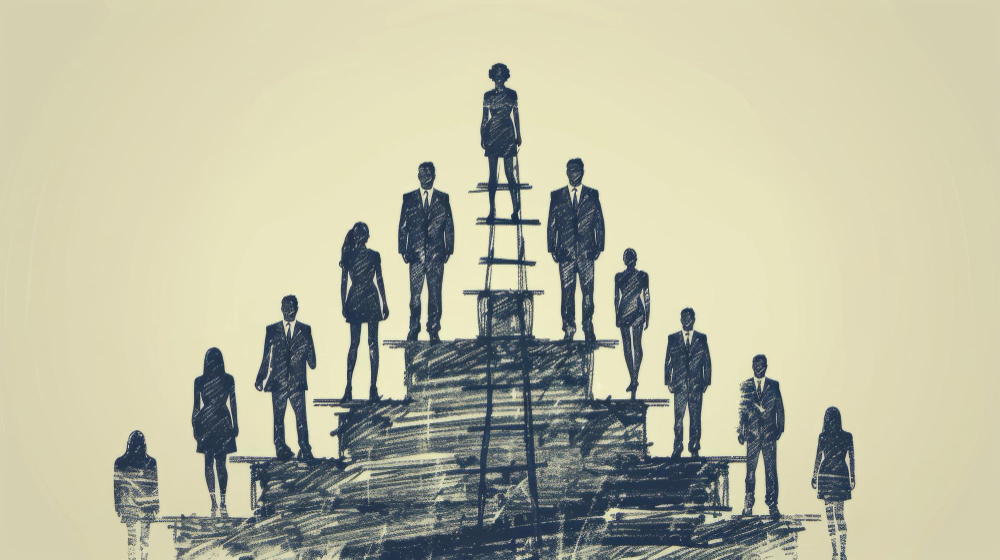
For more than a century, organizations have been built around a remarkably durable equation:
One person. One role. One manager. One box on the org chart.
The person is hired into a role.
The role belongs to a department.
The department reports through a hierarchy.
The hierarchy allocates work, controls budgets, evaluates performance, and coordinates with other hierarchies.
This architecture became so normal that we stopped seeing it as an architecture.
We began treating it as the natural shape of work.
It is not.
It is a management system developed for a world in which productive capability was predominantly human, expensive to access, difficult to coordinate across distance, and available in relatively stable bundles called jobs.
Artificial intelligence is now dismantling each of those assumptions.
A person is no longer the smallest meaningful unit of productive capacity.
A role no longer represents everything required to produce an outcome.
A manager may supervise humans, agents, workflows, vendors, and software systems simultaneously.
A department may own neither all the capability nor all the information needed to complete its work.
An AI agent may perform parts of several jobs without belonging to any of them.
A small team may possess the productive reach of a much larger organization.
Work can now be decomposed, automated, recombined, and executed across organizational boundaries at extraordinary speed.
And yet, most enterprises are still trying to fit this new capacity into old boxes.
They are adding AI assistants to employees.
They are purchasing copilots for departments.
They are creating AI centers of excellence.
They are assigning budgets.
They are launching pilot programs.
They are debating which roles will disappear.
But they are leaving the underlying organizational design largely untouched.
That is the mistake.
AI did not merely arrive as a new category of software.
It introduced a new form of productive actor into the organization.
And the org chart has no idea where to put it.
We Are Asking the Wrong Question
The public conversation about AI and work has been dominated by one question:
Which jobs will AI replace?
It is an understandable question.
Jobs determine income, identity, social status, benefits, and economic security.
If technology can perform tasks previously performed by people, workers naturally worry about displacement.
Leaders wonder how many employees they will need.
Investors look for margin improvements.
Governments worry about employment.
Educators wonder which skills remain valuable.
But “Which jobs will disappear?” may be too narrow.
Jobs are administrative containers.
They bundle many different forms of work into one employment relationship.
A marketing manager may conduct research, write content, analyze campaigns, coordinate agencies, prepare presentations, manage budgets, attend meetings, coach employees, and make strategic decisions.
AI may automate some of those tasks.
It may accelerate others.
It may not be appropriate for several.
The job does not disappear as one indivisible unit.
It fractures.
Some activities move to machines.
Some remain with the person.
Some are redesigned.
Some become more valuable.
Some cease to be necessary.
Some new responsibilities emerge.
This means the real disruption does not occur first at the level of the job.
It occurs at the level of the role architecture.
Once work can be separated from the person who historically performed it, the assumptions behind departments, management layers, workforce planning, budgeting, and accountability begin to weaken.
The better question is:
What happens to the organization when capability can no longer be mapped neatly to employees and roles?
That is where the deeper transformation begins.
The Org Chart Is a Map of Authority, Not Work
An org chart tells us several things.
Who reports to whom.
Which functions exist.
Where formal authority sits.
How management responsibilities are divided.
How many layers separate employees from senior leadership.
It does not show how work actually moves.
It does not reveal:
-
Which customer outcome is being pursued
-
What capabilities that outcome requires
-
Which departments must collaborate
-
Which software systems are involved
-
Where decisions are waiting
-
Which vendors contribute
-
Which people possess critical informal knowledge
-
Where AI is already being used
-
Who can stop the work
-
Who verifies completion
The org chart maps the ownership of people.
It does not map the production of outcomes.
That limitation existed before AI.
But AI makes it impossible to ignore.
Imagine a customer-support organization deploying an AI agent.
The agent reads customer messages.
It retrieves account information.
It searches product documentation.
It recommends responses.
It drafts communications.
It identifies sentiment.
It escalates complex issues.
It may update the CRM.
It may trigger a refund workflow.
Where does that agent sit on the org chart?
Under customer support?
Product?
IT?
Data?
Operations?
Risk?
The answer matters because the agent affects all of them.
Customer support may use it.
Product may provide the knowledge.
IT may operate the infrastructure.
Security may control access.
Legal may govern its communication.
Finance may be affected by refund decisions.
Data teams may evaluate performance.
No single box represents the agent’s operational reality.
The org chart assumes that productive actors belong inside one reporting structure.
AI agents do not.
They operate across processes.
They are closer to shared capabilities than employees.
Trying to force them into departmental ownership creates confusion over responsibility, funding, access, risk, and performance.
The Modern Job Is a Bundle Created for Administrative Convenience
Jobs feel natural because they have shaped economic life for generations.
But a job is a constructed bundle.
It combines:
-
A set of tasks
-
A compensation level
-
A title
-
A manager
-
A reporting line
-
A work schedule
-
An employment contract
-
A career path
-
Organizational identity
-
Access to systems
-
Performance expectations
These elements are bundled because the organization historically needed a practical way to acquire and govern human capacity.
The bundle was efficient when capability was difficult to separate from the individual.
If you needed accounting work, you hired an accountant.
If you needed software development, you hired a developer.
If you needed management, you promoted a manager.
The person carried the capability.
AI separates capability from the employee.
A developer can now use agents for code generation, testing, documentation, migration, debugging, and analysis.
A lawyer can use AI for research, document review, clause comparison, and drafting.
A salesperson can use AI for account research, call preparation, follow-up, and pipeline analysis.
A finance team can use AI for reconciliation, variance analysis, reporting, and anomaly detection.
The human remains important.
But the work bundle changes.
The job description says one thing.
The actual distribution of work says another.
Organizations will soon face a strange reality:
Two people with the same title may have radically different productive capacity depending on how they use AI, which agents they can access, what workflows have been redesigned, and how much decision authority they hold.
The role will no longer reliably predict output.
Headcount will no longer reliably predict capacity.
Titles will no longer reliably describe capability.
The administrative map will drift further from operational reality.
AI Introduces a New Kind of Worker—Without Creating an Employee
An AI agent can:
-
Receive an objective
-
Access tools
-
Retrieve information
-
Make limited decisions
-
Produce work
-
Trigger actions
-
Collaborate with other agents
-
Escalate exceptions
-
Record activity
-
Operate continuously
That description sounds less like conventional software and more like a participant in work.
But the agent is not an employee.
It has no career.
No loyalty.
No human judgment.
No moral agency.
No need for motivation.
No personal accountability.
No understanding of meaning beyond its training, instructions, tools, and context.
This creates an organizational category that did not previously exist.
The agent is not merely a passive application.
It may act.
But it cannot carry responsibility in the human sense.
It can produce.
But it cannot own the consequences.
It can follow rules.
But it cannot determine which values should govern an ambiguous decision.
It can simulate judgment.
But the organization must decide where actual accountability remains.
This distinction is critical.
Enterprises cannot solve AI governance by declaring an agent “responsible” for an outcome.
Responsibility must still reside with a human or institution.
But if the human does not perform most of the work, conventional management becomes difficult.
What does it mean to manage an agent?
What is its performance review?
Who trains it?
Who approves its tools?
Who monitors its decisions?
Who owns the mistakes?
Who decides when it should stop?
Who controls the data it can access?
Who verifies that its output remains reliable after models, policies, or systems change?
The old manager manages people.
The new execution leader must govern a mixed system of people, agents, software, data, and partners.
That is a fundamentally different discipline.
Span of Control Is About to Lose Its Meaning
Traditional management theory asks how many employees one manager can effectively supervise.
The answer depends on the complexity of work, employee experience, process maturity, and need for coordination.
AI breaks this calculation.
A manager may supervise eight people.
Each person may operate multiple agents.
The team may also rely on automated workflows, external specialists, and shared platforms.
Is the manager supervising eight workers?
Forty productive actors?
One integrated execution system?
The question itself becomes unstable.
A sales manager may lead ten account executives, each supported by research, outreach, proposal, forecasting, and follow-up agents.
A software leader may oversee five engineers whose agents produce code, tests, documentation, and infrastructure configurations.
A customer-success leader may manage a small human team supported by hundreds of automated customer interactions.
The visible headcount remains small.
The operational surface expands dramatically.
This creates a new kind of management burden.
The leader does not need to hold one-to-one meetings with agents.
But the leader must understand:
-
What agents are doing
-
Where their instructions come from
-
Which decisions they can make
-
How outputs are evaluated
-
Where errors accumulate
-
How humans intervene
-
Whether the system is achieving the intended outcome
Management shifts from supervising activity to designing and governing execution.
The unit of management is no longer the employee.
It is the outcome-producing system.
The Manager’s Traditional Role Is Being Decomposed Too
Managers perform many functions:
-
Assigning work
-
Transferring information
-
Resolving priorities
-
Monitoring progress
-
Approving decisions
-
Coaching employees
-
Evaluating performance
-
Coordinating across departments
-
Reporting upward
-
Protecting the team
-
Interpreting strategy
-
Managing exceptions
AI can assist with several of these activities.
It can allocate routine work.
Generate status reports.
Identify blocked tasks.
Summarize meetings.
Surface anomalies.
Recommend priorities.
Document decisions.
Track commitments.
Provide coaching prompts.
This does not make managers unnecessary.
But it removes some of the information-processing justification for management layers.
Many organizations created layers because information could not move efficiently across large groups.
Managers aggregated information from below and translated direction from above.
AI can reduce the cost of that translation.
It can make operational reality visible without requiring every layer to manually reconstruct it.
This raises an uncomfortable question:
How many management positions exist because people need leadership—and how many exist because the organization’s information systems are inadequate?
The two have long been bundled together.
AI will separate them.
Leaders who create clarity, judgment, trust, development, and direction will remain valuable.
Managers whose primary function is collecting updates, forwarding approvals, and translating dashboards may find the role rapidly hollowed out.
Again, the job may not disappear overnight.
But the logic that justified it begins to erode.
Departments Were Built Around Scarce Human Expertise
Functional departments emerged because expertise benefited from concentration.
Engineers worked with engineers.
Finance professionals worked with finance professionals.
Marketers shared tools, standards, and leadership.
Specialists developed depth through repeated interaction.
This remains valuable.
But functions also became territorial containers.
They control:
-
People
-
Budgets
-
Priorities
-
Tools
-
Processes
-
Career paths
-
Performance evaluation
Work that crosses functions must negotiate these boundaries.
AI creates capabilities that are inherently cross-functional.
A language model may support legal, marketing, sales, customer service, operations, and engineering.
A data agent may operate across finance, supply chain, and customer analytics.
A coding agent may support product development, internal automation, and implementation.
Who owns the capability?
The function that funds it?
The team that uses it most?
The technology organization?
The data organization?
A centralized AI office?
Each answer creates trade-offs.
Centralize too much, and AI becomes distant from operational work.
Decentralize too much, and the company creates duplicated tools, inconsistent controls, security risk, and fragmented learning.
The old organizational choice—centralized versus decentralized—is no longer enough.
AI capabilities may need to be centrally governed but locally composed.
Standards may be shared.
Execution may remain close to the outcome.
This requires a networked design rather than a purely hierarchical one.
AI Makes Roles Porous
Consider a product manager using AI.
The agent can produce market research, draft specifications, analyze customer feedback, generate wireframe concepts, and create release communications.
The product manager is now performing parts of research, analysis, design, documentation, and marketing.
A software engineer uses AI to explore user requirements, create interface copy, write tests, and generate technical documentation.
A salesperson uses AI to analyze contracts, model pricing, prepare implementation plans, and generate account strategies.
The boundaries between roles become porous.
This can be liberating.
People can operate closer to the outcome rather than waiting for every specialist handoff.
But it also creates risk.
A person may perform work outside their expertise without realizing where judgment is required.
An AI-generated legal interpretation may appear plausible.
A security design may appear complete.
A financial model may contain hidden assumptions.
A marketing claim may create regulatory exposure.
The future cannot simply be “everyone does everything with AI.”
Capability boundaries still matter.
But they must be expressed differently.
Instead of defining ownership only through roles, organizations need to distinguish among:
-
Work a person may perform
-
Work AI may assist
-
Work requiring specialist review
-
Decisions requiring formal authority
-
Actions requiring independent verification
-
Outcomes requiring institutional accountability
This is more granular than an org chart.
It is closer to an execution protocol.
AI Will Create Shadow Organizations
Most companies already have shadow IT.
Employees adopt tools without formal approval because official systems do not meet their needs.
AI will create something larger: shadow execution.
Employees are already using models and agents to:
-
Draft communications
-
Analyze customer information
-
Generate code
-
Review documents
-
Prepare decisions
-
Create presentations
-
Automate repetitive work
-
Conduct research
-
Simulate scenarios
Some organizations have approved this use.
Much of it remains informal.
This means the official org chart and process documentation may show one operating model while the real work happens through another.
A task assigned to one employee may actually be completed by a combination of:
-
The employee
-
A public AI model
-
A private company agent
-
An external data source
-
An automated workflow
-
A colleague who validates the result
The organization sees one person completing the task.
The actual execution chain is invisible.
This creates several problems:
-
Sensitive data may leave approved environments.
-
Intellectual property may be exposed.
-
Errors may be difficult to trace.
-
The company may not know which models influenced a decision.
-
Performance comparisons between employees become distorted.
-
Critical workflows may depend on personal tools.
-
Knowledge may not be retained.
-
The organization may underestimate its true dependency on AI.
Banning AI will not solve this.
People adopt powerful tools when those tools help them succeed.
The better response is to make the real execution system visible and governable.
Headcount Is Becoming a Poor Measure of Organizational Capacity
For decades, headcount has been used as a proxy for scale.
A 10,000-person company was assumed to possess more productive capacity than a 1,000-person company.
Within a function, more employees implied more output.
Leadership status often grew with team size.
Budgets expanded with headcount.
Investors tracked revenue per employee.
AI weakens the relationship between employees and capacity.
A ten-person AI-native team may outperform a traditional fifty-person function.
A large company may possess thousands of employees but move slowly because its capacity is trapped behind coordination barriers.
A small organization may use agents and platforms to reach millions of customers.
A company may access significant capability through partners without employing it directly.
Headcount still matters for cost, culture, legal obligations, and human leadership.
But it no longer tells us enough.
Future organizations will need new measures:
-
Outcomes delivered
-
Time from intent to outcome
-
Human-to-agent leverage
-
Verification rates
-
Decision latency
-
Capability coverage
-
Reconfiguration speed
-
Cost per verified outcome
-
Percentage of work automated safely
-
Knowledge retained
-
Exceptions requiring human judgment
The company after headcount will not ignore people.
It will stop pretending that the number of people reveals the full shape of the organization.
Performance Management Becomes More Complicated
Imagine two analysts.
Both receive the same assignment.
The first manually collects data, builds a spreadsheet, and produces a report over three days.
The second uses an approved AI workflow, validates the findings, and produces a better report in three hours.
How should performance be evaluated?
Is the second analyst more capable?
Better equipped?
More innovative?
Or simply using a system unavailable to the first?
Now imagine a third analyst who uses an unapproved tool, exposes confidential data, and still produces an excellent report.
Was the outcome successful?
Not entirely.
Traditional performance systems focus on the individual.
But AI-supported work is a system performance.
The result depends on:
-
The person’s judgment
-
The model
-
The prompt or instructions
-
Available data
-
Workflow design
-
Verification
-
Tool permissions
-
Organizational context
Attributing the entire output to the employee becomes misleading.
Attributing it to the AI is equally wrong.
Performance management must evolve from evaluating isolated human effort to evaluating responsible orchestration.
The valuable employee may not be the one who personally produces the most.
It may be the one who designs the most reliable system, makes the best decisions, improves the workflow, and knows when not to trust the machine.
Career Ladders Were Built Around Accumulating Human Work
Traditional careers often progress like this:
First, you perform tasks.
Then, you perform more complex tasks.
Then, you supervise others performing tasks.
Then, you manage managers.
Eventually, your status is associated with the size of the organization beneath you.
AI disrupts this ladder.
Many entry-level tasks are precisely the ones AI can perform or accelerate.
But those tasks historically helped people learn.
Junior employees developed judgment by conducting research, drafting documents, reviewing code, preparing analysis, and observing how experienced colleagues corrected their work.
If AI performs the initial work, how will people develop expertise?
This is not an argument for preserving inefficient manual work forever.
It is an argument for redesigning learning.
Organizations need new apprenticeships in which people learn to:
-
Frame problems
-
Inspect AI output
-
Recognize weak reasoning
-
Understand domain context
-
Handle exceptions
-
Make ethical choices
-
Communicate uncertainty
-
Validate evidence
-
Assume increasing responsibility
Career progression may also stop depending so heavily on people management.
Experts who can orchestrate complex human-machine systems may create enormous value without supervising large teams.
Organizations will need credible paths for:
-
Expert contributors
-
Execution architects
-
Agent governors
-
Capability composers
-
Domain validators
-
Outcome owners
The future of work cannot be built on old career ladders with AI added at the bottom.
Budgeting Will Also Break
Most organizations allocate budgets by department.
Functions receive headcount, technology, and vendor budgets.
Leaders optimize within those categories.
AI blurs them.
An AI investment may reduce labor in one function, increase technology cost in another, require governance spending elsewhere, and create benefits across the enterprise.
Who pays?
If the technology department funds the agent but the operations team receives the benefit, incentives may misalign.
If departments are rewarded for protecting headcount, automation may be resisted.
If savings are removed immediately from the adopting team, leaders may avoid efficiency improvements.
If every function purchases separate AI systems, duplication and risk increase.
Outcome-based budgeting may become necessary.
Instead of asking only:
“How much should each department receive?”
Leaders may ask:
“What execution capacity does this outcome require, across people, agents, systems, and partners?”
This is a major shift.
It moves money away from permanent containers and toward dynamic execution.
Accountability Cannot Be Automated
An agent may make a recommendation.
A workflow may execute a transaction.
A model may rank candidates, approve a claim, identify fraud, or generate a customer response.
But the institution remains accountable.
This is one of the most important principles of AI-native organization design:
Work can be delegated to machines. Accountability cannot.
Someone must decide:
-
Whether the agent should perform the task
-
Which data it may access
-
What level of autonomy is appropriate
-
How accuracy will be evaluated
-
Which decisions require human review
-
How affected people can challenge outcomes
-
What happens when the agent fails
-
When the system must be suspended
The org chart currently assigns accountability through roles.
But when execution crosses people, agents, platforms, and departments, role-based accountability becomes incomplete.
Organizations need explicit outcome ownership.
The outcome owner may not perform every task.
But they remain accountable for the integrity of the system producing the result.
This distinction will become central to governance.
AI Does Not Remove Hierarchy—It Changes What Hierarchy Is For
Some futurists imagine AI eliminating management and creating flat, autonomous organizations.
That is unlikely.
Organizations still need:
-
Direction
-
Prioritization
-
Risk decisions
-
Resource allocation
-
Conflict resolution
-
Ethical judgment
-
Institutional accountability
-
Leadership during uncertainty
Hierarchy will remain useful where decisions require clear authority.
But it may no longer be the primary mechanism for moving information and coordinating routine work.
That means hierarchy can become narrower and more purposeful.
Instead of managing every task, leaders establish:
-
Outcomes
-
Boundaries
-
Rules
-
Decision rights
-
Escalation thresholds
-
Verification standards
-
Resource constraints
People and agents operate within those boundaries.
Management intervenes where judgment, conflict, risk, or strategic change requires it.
The organization becomes less approval-driven and more protocol-driven.
This does not mean less control.
It can create better control by making authority explicit before work begins rather than forcing every action through repeated escalation.
The AI-Native Organization Is Not a Traditional Company With Copilots
Many companies currently describe themselves as AI-powered because employees have access to AI tools.
That is not an AI-native organization.
Adding copilots to an old workflow may improve individual productivity.
It does not redesign the system.
An AI-native organization asks deeper questions:
-
Why does this workflow exist?
-
Which parts require human judgment?
-
Which parts can be automated?
-
Where must independent verification occur?
-
Can the number of handoffs be reduced?
-
Does this role still make sense as a bundle?
-
Should this capability remain in one department?
-
Who owns the complete outcome?
-
How should humans and agents collaborate?
-
What information should be persistent across the process?
-
How quickly can the execution system be recomposed?
The organization does not simply automate steps.
It rethinks the architecture around the outcome.
This is the same distinction between digitizing a paper form and redesigning the service.
The first makes the old system faster.
The second creates a better system.
From Org Charts to Execution Graphs
If the org chart is no longer enough, what replaces it?
Not one static diagram.
Organizations will still need legal structures, reporting lines, and accountable leaders.
But they also need an execution graph.
An execution graph begins with an outcome.
For example:
Reduce customer onboarding time from six weeks to ten days while maintaining security and implementation quality.
The graph then maps:
-
Required capabilities
-
Human owners
-
AI agents
-
Software systems
-
Data inputs
-
Decisions
-
Dependencies
-
Controls
-
Verification points
-
Escalation paths
-
Economic terms
Unlike the org chart, the execution graph can change as the work changes.
During discovery, customer research and process analysis may be central.
During implementation, integration and data capabilities become more important.
During rollout, training and customer success enter the graph.
Some contributors remain.
Others leave.
Agents may be added, constrained, or replaced.
The outcome remains the organizing principle.
This structure reflects how modern work actually happens.
It does not eliminate departments.
It connects them around delivery.
Roles Will Give Way to Capability Portfolios
In the old organization, people were described primarily by title.
In the emerging organization, a person may be understood through a richer capability portfolio:
-
Domain knowledge
-
Technical skills
-
Decision authority
-
Verified outcomes
-
Tools and agents they can operate
-
Review and validation capability
-
Collaboration history
-
Risk permissions
-
Availability
-
Learning trajectory
This is not a return to treating people as interchangeable skills.
Quite the opposite.
A capability portfolio can reveal more of a person than a title or résumé.
A title says “senior software engineer.”
A capability portfolio may show that the person can:
-
Design distributed systems
-
Modernize legacy platforms
-
Validate AI-generated code
-
Lead incident recovery
-
Communicate with enterprise stakeholders
-
Mentor junior contributors
-
Operate in regulated environments
-
Work effectively with specific agent workflows
The future organization will need this level of understanding to compose teams dynamically.
Roles may remain useful shorthand.
They will no longer be sufficient as the primary unit of work.
The Human Contribution Moves Upward
The phrase “AI replaces human work” creates an incomplete picture.
AI may remove some tasks.
But it also increases the value of distinctly human contributions.
As production becomes easier, the scarce work moves toward:
-
Determining what matters
-
Understanding context
-
Making trade-offs
-
Exercising judgment
-
Building trust
-
Handling ambiguity
-
Creating original direction
-
Taking responsibility
-
Recognizing ethical implications
-
Navigating human emotion
-
Challenging flawed assumptions
-
Deciding when the machine is wrong
This is not automatically comforting.
Not every worker will be able to move easily into these activities.
Organizations cannot simply tell people to “be more strategic.”
They must redesign work, training, and opportunity.
But the direction is clear.
Humans will create less value by acting as expensive mechanisms for moving information and performing repeatable steps.
They will create more value by shaping, governing, and interpreting execution.
The human does not disappear.
The human moves closer to meaning and consequence.
Small Teams Will Become More Powerful
AI lowers the amount of human coordination required to produce certain outcomes.
A small team can now:
-
Research markets
-
Build prototypes
-
Generate code
-
Test systems
-
Create content
-
Analyze data
-
Operate support
-
Automate administration
-
Reach global customers
This favors focused teams.
Large organizations historically possessed advantage because they could accumulate more people, knowledge, and infrastructure.
AI gives smaller teams access to some of that scale.
This does not mean every small team will win.
Large enterprises still possess capital, customers, data, regulatory experience, distribution, and institutional trust.
But scale becomes less decisive when small teams can rent intelligence and infrastructure.
The danger for large organizations is not merely that startups gain AI.
It is that internal coordination costs prevent the enterprise from using AI effectively.
A ten-person team with clear ownership may deploy an agent workflow in weeks.
A large company may spend months debating platforms, governance, funding, ownership, and integration.
The technology is equally available.
Execution architecture determines the difference.
Large Organizations Will Become More Fragile
AI can make large organizations more capable.
It can also expose their weaknesses.
When individual production accelerates, coordination latency becomes more expensive.
When agents can operate continuously, decisions waiting for committees become more visible.
When knowledge can be retrieved instantly, management layers built around information transfer lose justification.
When small teams can deliver more, bloated structures become harder to defend.
When roles become porous, rigid career and compensation systems become misaligned.
When work crosses departments, functional ownership becomes a bottleneck.
The large organization may have more resources than ever.
But if its architecture cannot adapt, those resources create congestion.
AI will not automatically favor the biggest or the smallest.
It will favor the most reconfigurable.
The New Organization Must Be Designed Around Five Principles
1. Outcomes before roles
Begin with what must become true.
Then determine which human, machine, and organizational capabilities are required.
Do not begin by asking which department owns the work.
2. Capability before headcount
Assess the capability need without immediately translating it into permanent employees.
Some capabilities should be hired.
Others may be accessed, automated, or composed temporarily.
3. Governance before autonomy
Define data access, decision boundaries, verification requirements, and accountability before deploying autonomous agents.
Speed without control creates institutional risk.
4. Verification before scale
Do not expand an AI workflow simply because it produces impressive output.
Confirm that it produces reliable outcomes under real operating conditions.
5. Reconfigurability before efficiency
The cheapest system today may become the most expensive system to change tomorrow.
Design for evolving models, capabilities, regulations, and customer needs.
The future organization is not merely lean.
It is adaptable.
A Virtual Delivery Center Becomes More Relevant in This World
The Virtual Delivery Center was not conceived merely as a remote workplace.
Its deeper purpose is to create an execution environment where different forms of capability can be assembled and governed around outcomes.
That may include:
-
Core employees
-
External specialists
-
AI agents
-
SaaS tools
-
Delivery partners
-
Automated workflows
-
Customer systems
The VDC does not need to reproduce the traditional department.
It can form around an execution mandate.
A product line.
A transformation.
A customer implementation function.
An AI modernization program.
A compliance capability.
A continuous area of operational work.
The composition can change while the governance remains stable.
People can enter and leave.
Agents can be introduced or replaced.
Capabilities can expand or contract.
The organization maintains visibility, access controls, financial governance, and outcome accountability.
This is important because AI will create more fluid capability.
Without a stable execution environment, that fluidity becomes fragmentation.
The VDC provides a possible container for dynamic execution—not by fixing people permanently into roles, but by governing how capabilities combine.
What Leaders Should Do Now
The shift is already underway.
Leaders do not need to wait for some imagined future in which autonomous agents run entire businesses.
They can begin redesigning the organization today.
Map work, not just people
Choose one important outcome and trace how it is produced.
Identify every human, agent, system, decision, and handoff involved.
The real organization will look different from the org chart.
Decompose roles into tasks and judgments
For each role, identify:
-
Repeatable tasks
-
Information-processing tasks
-
Judgment-intensive work
-
Relationship work
-
Accountability
-
Activities that AI can assist
-
Activities requiring human verification
Do not begin with the assumption that the role remains intact.
Establish explicit agent ownership
Every production agent should have a clearly identified human or institutional owner.
Ownership should include performance, access, risk, and suspension authority.
Redesign decision rights
As task production accelerates, slow decisions become the dominant bottleneck.
Define which decisions people and agents can make without escalation.
Build new performance measures
Do not evaluate AI-enabled work through hours, activity, or headcount alone.
Measure outcomes, quality, decision speed, reliability, adoption, and responsible use.
Protect the learning pipeline
Do not automate junior work without creating new ways for people to develop judgment.
The organization still needs future experts.
Separate core accountability from variable execution
Determine what must remain permanently inside the organization.
Then build governed access to the capabilities that fluctuate.
Create cross-functional execution environments
Do not force every AI initiative into one department.
Compose the capabilities around real business outcomes.
The Org Chart Will Not Disappear Overnight
Companies will continue to employ people.
People will continue to have managers.
Legal entities will require accountable officers.
Functions will remain useful.
Departments will develop expertise.
Teams will build trust.
The mistake is imagining that the future organization must completely abandon everything that came before.
Organizational evolution rarely works that way.
The org chart will remain.
But it will become only one layer of the enterprise.
It will show the permanent core.
Alongside it, the execution graph will show how work is actually delivered.
Capability portfolios will describe what people and systems can do.
Agent registries will show which machines can act.
Governance protocols will define authority and control.
Outcome structures will connect activity to value.
The organization becomes multidimensional.
Hierarchy remains where hierarchy is useful.
Networks emerge where work crosses boundaries.
Temporary execution units form where demand is episodic.
AI agents participate where automation is appropriate.
Humans retain responsibility where judgment and consequence matter.
AI Is an Organizational Technology
We often speak of AI as a productivity technology.
It is that.
We speak of it as a software platform.
It is that too.
We speak of it as a labor-substitution technology.
In some areas, it will be.
But its most profound effect may be organizational.
Electricity did not merely replace steam engines.
It changed how factories could be designed.
The internet did not merely improve communication.
It changed how markets, companies, and communities could be organized.
Cloud computing did not merely reduce server costs.
It changed how technology capacity could be accessed and scaled.
AI will not merely automate tasks.
It will change how intelligence, capability, authority, and execution are arranged.
The organizations that understand this will redesign themselves.
The organizations that do not will add AI tools to old structures and wonder why the promised transformation never arrives.
The Future Is Not Humans Versus AI
That framing is too simple.
The real competition will be between organizational systems.
One company will have talented employees and advanced AI, but fragmented ownership, slow decisions, rigid roles, and departmental barriers.
Another will have access to similar technology but will organize people and agents around outcomes, establish clear governance, reduce handoffs, and reconfigure capability quickly.
The second company will win.
Not because its AI is necessarily better.
Because its organizational design allows intelligence—human and machine—to become execution.
The future of work is not a contest between humans and machines.
It is a contest between companies that can compose them effectively and companies that cannot.
AI Didn’t Kill the Job. It Exposed the Box.
Jobs will change.
Some will disappear.
Many will be redesigned.
New ones will emerge.
The human consequences will be significant and must not be minimized.
But focusing only on job loss misses the larger transformation.
AI is revealing that the organization was built around a temporary historical assumption:
That productive capability came in stable, human-sized units that could be hired into roles, grouped into departments, and coordinated through management hierarchies.
That assumption is ending.
Capability can now be separated from roles.
Intelligence can be accessed through machines.
Teams can become smaller and more powerful.
Work can be decomposed and recomposed.
Execution can cross company boundaries.
Managers can govern systems rather than merely supervise people.
Organizations can access capability without owning all of it permanently.
The old boxes do not describe this reality.
That is why AI’s greatest disruption may not be the number of jobs it eliminates.
It may be the number of organizational assumptions it makes impossible to defend.
AI did not merely threaten the employee.
It challenged the role.
It challenged the manager.
It challenged the department.
It challenged headcount.
It challenged the hierarchy.
It challenged the belief that owning people is the same as possessing capability.
AI did not kill jobs.
It killed the logic of the org chart.
The companies that recognize this will redesign the architecture of execution.
The rest will keep adding intelligent tools to structures that are no longer intelligent enough to contain them.