H
Looking to implement or upgrade HTK?
Schedule a Meeting
Speech Recognition

HTK

Enterprise-grade HMM toolkit for advanced speech recognition and acoustic modeling

Category
Software
Ideal For
Research Institutions
Deployment
On-premise
Integrations
None+ Apps
Security
Source code availability, community-driven validation
API Access
Yes, extensible API for custom HMM implementations

About HTK

HTK (Hidden Markov Model Toolkit) is a robust, portable software framework for building and manipulating HMMs, with specialized capabilities for speech recognition and acoustic modeling. Widely adopted in academic research and industry applications, HTK provides comprehensive tools for HMM training, recognition, and experimentation. The toolkit supports flexible feature extraction, model construction, and advanced pattern matching algorithms essential for speech processing tasks. AiDOOS enhances HTK deployment by providing managed infrastructure, streamlined integration with modern ML pipelines, optimized computational resources for large-scale model training, and enterprise governance frameworks. Organizations leverage AiDOOS to accelerate HTK implementation, reduce infrastructure overhead, and seamlessly connect HTK-generated models with downstream NLP and analytics systems, enabling faster time-to-production for speech recognition solutions.

Challenges It Solves

  • Complex HMM architecture requires specialized expertise and steep learning curve
  • Resource-intensive training processes demand significant computational infrastructure
  • Integration challenges when connecting HTK models with modern ML ecosystems
  • Limited scalability for production-grade speech recognition deployments
  • Difficulty maintaining model consistency across distributed research environments

Proven Results

64
Accelerated model development and training cycles
48
Reduced infrastructure costs through optimized resource allocation
35
Seamless integration with enterprise AI pipelines

Key Features

Core capabilities at a glance

HMM Model Construction & Manipulation

Build and configure sophisticated hidden Markov models

Support for context-dependent models, tied-state systems

Advanced Feature Extraction

Comprehensive acoustic feature engineering capabilities

MFCC, PLP, spectral features with normalization

Flexible Training Algorithms

Industry-standard Baum-Welch and discriminative training methods

Convergence optimized for large-scale acoustic data

Recognition & Decoding Engine

High-performance Viterbi algorithm implementation

Real-time decoding with configurable beam widths

Cross-Platform Portability

Deploy across Linux, Windows, macOS environments

Consistent behavior and reproducible results

Extensible Architecture

Customize and extend core functionality

API support for research-grade customizations

Ready to implement HTK for your organization?

Real-World Use Cases

See how organizations drive results

Academic Speech Recognition Research
Universities and research institutions utilize HTK to develop and validate novel acoustic modeling techniques, conduct comparative studies, and publish peer-reviewed findings in speech technology.
78
Accelerated publication cycles and research validation
Commercial Voice Assistant Development
Technology companies deploy HTK as a foundational component for building custom speech recognition engines tailored to specific languages, domains, and acoustic conditions.
65
Reduced time-to-market for voice-enabled products
Multi-Lingual Speech Recognition Systems
Organizations develop and maintain language-specific acoustic models using HTK's flexible HMM framework, supporting polyglot speech interfaces across global markets.
72
Language model accuracy improved by consistent training
Acoustic Model Optimization
Teams leverage HTK to fine-tune and optimize acoustic models for specific hardware constraints, noise profiles, and user demographics, improving overall system robustness.
58
Enhanced recognition accuracy in noisy environments

Integrations

Seamlessly connect with your tech ecosystem

K

Kaldi Speech Recognition Toolkit

Explore

Interoperate with Kaldi for advanced speech recognition pipelines and hybrid acoustic modeling approaches

P

Python Speech Processing Libraries

Explore

Integrate with librosa, speechpy, and scipy for feature extraction and signal processing workflows

T

TensorFlow & PyTorch

Explore

Connect HTK-generated acoustic features with deep learning frameworks for neural acoustic modeling

O

OpenFST (Finite State Transducers)

Explore

Combine HMM models with FST-based language models for end-to-end speech recognition systems

J

Julius Speech Recognition Engine

Explore

Export HTK models for deployment in Julius-based real-time speech recognition applications

C

CMU Sphinx

Explore

Leverage HTK acoustic models within Sphinx-based open-source speech recognition systems

A

Apache Spark

Explore

Distribute large-scale HMM training across Spark clusters via AiDOOS infrastructure

Implementation with AiDOOS

Outcome-based delivery with expert support

Outcome-Based

Pay for results, not hours

Milestone-Driven

Clear deliverables at each phase

Expert Network

Access to certified specialists

Implementation Timeline

1
Discover
Requirements & assessment
2
Integrate
Setup & data migration
3
Validate
Testing & security audit
4
Rollout
Deployment & training
5
Optimize
Performance tuning

See how it works for your team

Alternatives & Comparisons

Find the right fit for your needs

Capability HTK Kanal AWS Bedrock Joonbot Chatbot Bui…
Customization Excellent Good Excellent Excellent
Ease of Use Fair Excellent Excellent Excellent
Enterprise Features Good Good Excellent Good
Pricing Excellent Fair Good Good
Integration Ecosystem Good Good Excellent Excellent
Mobile Experience Poor Excellent Fair Good
AI & Analytics Good Good Excellent Good
Quick Setup Fair Excellent Excellent Excellent

Similar Products

Explore related solutions

Kanal

Kanal

Unlock the Power of Conversational Marketing with Kanal Kanal is a cutting-edge SaaS platform desig…

Explore

AWS Bedrock

AWS Bedrock

Amazon Bedrock: Accelerate Innovation with Managed Foundation Models Amazon Bedrock is a fully mana…

Explore
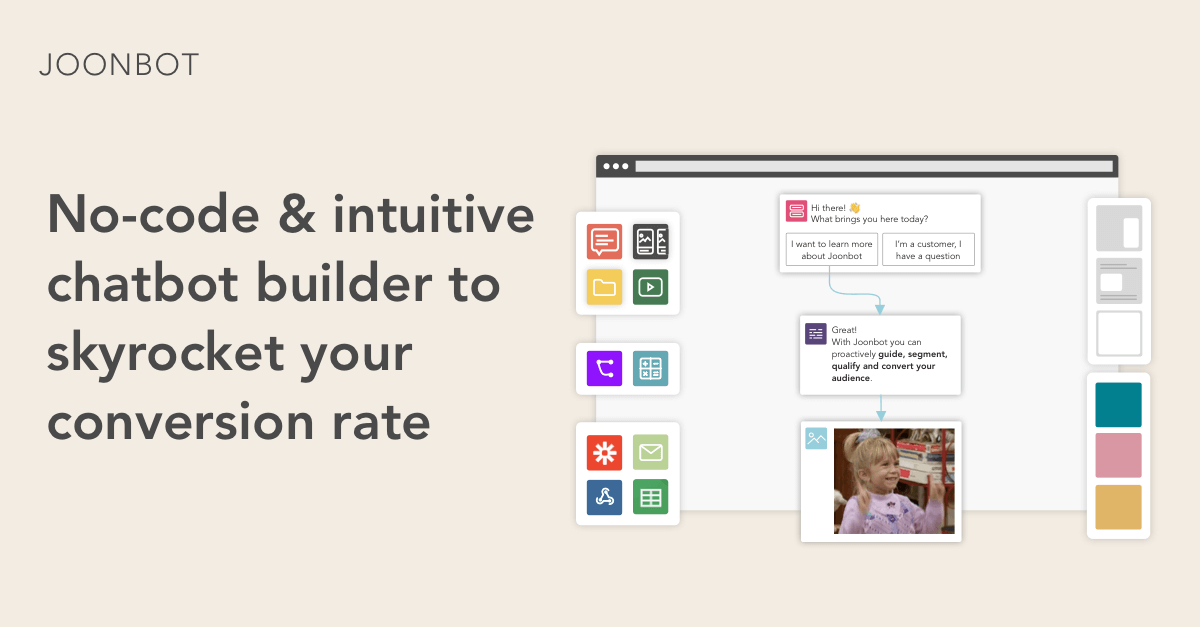
Joonbot Chatbot Builder

Joonbot Chatbot Builder

Transform Customer Engagement with Joonbot: The No-Code Chatbot Builder Joonbot empowers businesses…

Explore

Frequently Asked Questions

Is HTK suitable for production speech recognition deployments?
Yes. HTK is production-ready and widely deployed in commercial systems. AiDOOS provides enterprise-grade infrastructure, scalability, and monitoring to support mission-critical speech recognition applications.
What programming languages does HTK support?
HTK is written in C with command-line tools. It integrates seamlessly with Python, C++, and shell scripts. AiDOOS offers wrapper libraries and APIs to simplify integration with modern development environments.
Can HTK handle real-time speech recognition?
Yes, HTK's Viterbi decoder supports real-time recognition with tunable beam widths. AiDOOS infrastructure optimization ensures low-latency inference for voice applications and interactive systems.
How does HTK compare to modern deep learning approaches?
HTK excels in traditional HMM-based modeling. Many modern systems use HTK features with neural networks. AiDOOS enables hybrid architectures combining HTK with TensorFlow and PyTorch for state-of-the-art performance.
What are the computational requirements for training HTK models?
Requirements scale with dataset size and model complexity. AiDOOS provides elastic compute resources, distributed training support, and performance optimization to handle large-scale acoustic datasets efficiently.
Is HTK suitable for low-resource languages?
Yes. HTK's flexible architecture supports training with limited data. AiDOOS offers data augmentation tools, transfer learning pipelines, and efficient model compression for low-resource language speech recognition.