
Looking to implement or upgrade Google Cloud AutoML?
Schedule a Meeting
Machine Learning

Google Cloud AutoML

Build custom ML models without expertise using Google's advanced transfer learning technology

SOC2
ISO 27001
Category
Software
Ideal For
Enterprises
Deployment
Cloud
Integrations
None+ Apps
Security
Encryption in transit and at rest, IAM role-based access control, audit logging
API Access
Yes - RESTful API for model training and predictions

About Google Cloud AutoML

Google Cloud AutoML is a suite of machine learning services that democratizes AI development for organizations lacking deep ML expertise. By leveraging Google's proprietary transfer learning and Neural Architecture Search technologies, AutoML enables rapid model creation across multiple domains including vision, natural language processing, tabular data, and video intelligence. Users can build, train, and deploy production-ready models through an intuitive UI or programmatic interfaces. The platform automatically optimizes model architecture and hyperparameters, significantly reducing development time from months to weeks. AiDOOS marketplace integration enhances AutoML deployment by providing centralized governance, streamlined team collaboration, managed scaling infrastructure, and seamless integration with enterprise data pipelines. Organizations gain enterprise-grade model lifecycle management, compliance tracking, and multi-cloud orchestration through AiDOOS, enabling faster time-to-value while maintaining security and operational excellence.

Challenges It Solves

  • Building ML models requires specialized data science talent that is scarce and expensive
  • Traditional ML development cycles are lengthy, delaying business value realization
  • Organizations struggle to maintain model quality, accuracy, and performance over time
  • Integrating custom ML solutions with existing business systems is complex and costly

Proven Results

78
Faster model development from months to weeks
65
Reduced dependency on specialized ML engineers
52
Improved model accuracy through transfer learning

Key Features

Core capabilities at a glance

Neural Architecture Search

Automatically optimize model architecture for best performance

Achieve superior accuracy without manual hyperparameter tuning

Transfer Learning

Leverage pre-trained Google models for faster training

Reduce training time and data requirements by 70%

Multi-Domain Support

Build models for vision, NLP, tabular, and video data

Address diverse business challenges with single platform

No-Code UI

Intuitive interface requiring minimal technical expertise

Enable business users to build production-ready models

AutoML Vision

Custom image classification and object detection models

Deploy computer vision solutions in production weeks faster

AutoML Natural Language

Build custom NLP models for classification and entity extraction

Process unstructured text data with domain-specific accuracy

Ready to implement Google Cloud AutoML for your organization?

Real-World Use Cases

See how organizations drive results

Product Defect Detection
Manufacturing companies use AutoML Vision to automatically detect product defects in quality control processes, reducing manual inspection time and improving consistency.
85
Detect defects 85% faster than manual inspection
Document Classification
Financial institutions leverage AutoML NLP to automatically classify, route, and extract information from loan applications, mortgage documents, and regulatory filings.
72
Automate 72% of document processing workflows
Customer Churn Prediction
Telecommunications and SaaS companies build AutoML tabular models to predict customer churn, enabling proactive retention strategies and personalized interventions.
58
Identify churn risk customers 58% earlier
Medical Image Analysis
Healthcare providers deploy AutoML Vision models for preliminary screening of X-rays, CT scans, and pathology images, assisting radiologists in diagnosis.
91
Improve diagnostic accuracy by up to 91%
Content Moderation
Social media and e-commerce platforms use AutoML Vision and NLP to automatically detect and flag inappropriate content, reducing moderation costs and response time.
80
Moderate content 80% faster with AI assistance

Integrations

Seamlessly connect with your tech ecosystem

G

Google Cloud Storage

Explore

Seamlessly access training datasets from Cloud Storage buckets for model development

B

BigQuery

Explore

Query large datasets directly from BigQuery for tabular model training and predictions

V

Vertex AI

Explore

Unified platform for model training, deployment, and monitoring across Google Cloud

T

TensorFlow

Explore

Export trained models as TensorFlow SavedModel format for custom implementations

C

Cloud Run

Explore

Deploy trained models as serverless endpoints for scalable inference

P

Pub/Sub

Explore

Stream real-time predictions to applications using Google Cloud Pub/Sub messaging

D

Data Studio

Explore

Visualize model performance metrics and prediction results through Google Data Studio

Implementation with AiDOOS

Outcome-based delivery with expert support

Outcome-Based

Pay for results, not hours

Milestone-Driven

Clear deliverables at each phase

Expert Network

Access to certified specialists

Implementation Timeline

1
Discover
Requirements & assessment
2
Integrate
Setup & data migration
3
Validate
Testing & security audit
4
Rollout
Deployment & training
5
Optimize
Performance tuning

See how it works for your team

Alternatives & Comparisons

Find the right fit for your needs

Capability Google Cloud AutoML Unrealme Sonix QuickCEP
Customization Excellent Excellent Excellent Good
Ease of Use Excellent Excellent Excellent Excellent
Enterprise Features Excellent Good Excellent Good
Pricing Fair Fair Good Fair
Integration Ecosystem Excellent Good Excellent Excellent
Mobile Experience Good Good Good Good
AI & Analytics Excellent Excellent Excellent Excellent
Quick Setup Excellent Excellent Excellent Excellent

Similar Products

Explore related solutions

Unrealme

Unrealme

Transform Your Visual Identity with AI-Generated Images Unlock the power of artificial intelligence…

Explore

Sonix

Sonix

Sonix Transcription Software: Fast, Accurate, and Scalable—Expertly Deployed by AiDOOS Transform yo…

Explore
QuickCEP

QuickCEP

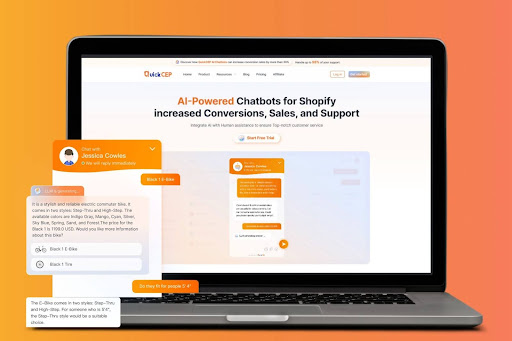
QuickCEP: Transforming Customer Engagement and Conversion Since 2021, QuickCEP has been at the fore…

Explore

Frequently Asked Questions

Do I need machine learning expertise to use Google Cloud AutoML?
No. AutoML is specifically designed for users without deep ML expertise. The platform provides an intuitive no-code UI that guides you through model creation. AiDOOS marketplace integration adds governance tools to help teams manage models responsibly without additional technical overhead.
How long does it take to train a model with AutoML?
Training time varies by dataset size and complexity, typically ranging from hours to days. Transfer learning technology significantly reduces training time compared to building models from scratch. Most organizations see production-ready models within 2-4 weeks of starting a project.
What types of data does AutoML support?
AutoML supports images, text, tabular data, and video. You can build models for classification, regression, object detection, entity extraction, and more depending on your data type and business problem.
Can I export and deploy models outside Google Cloud?
Yes. AutoML models can be exported as TensorFlow SavedModel format for deployment on-premises or on other cloud platforms. AiDOOS marketplace provides centralized deployment management across multi-cloud environments.
How is AutoML pricing calculated?
Pricing is based on compute resources used during model training and the number of predictions (inferences). You pay only for resources consumed, with no upfront commitments. Detailed pricing varies by model type and dataset size.
What level of model accuracy can I expect?
AutoML typically delivers 95%+ accuracy for well-prepared datasets. Actual accuracy depends on data quality, quantity, and problem complexity. Google's transfer learning leverages billions of parameters from pre-trained models for superior baseline accuracy.