Looking to implement or upgrade EBLearn?
Schedule a Meeting
Machine Learning Library

EBLearn

Accelerate machine learning development with object-oriented precision in C++

Category
Software
Ideal For
Machine Learning Engineers
Deployment
On-premise
Integrations
None+ Apps
Security
Standard C++ library security practices, source code auditable
API Access
Yes - C++ API for library integration

About EBLearn

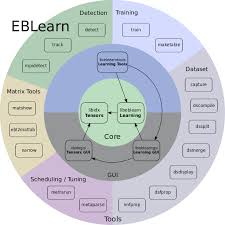
EBLearn is a robust, open-source C++ library engineered to empower developers and organizations with advanced machine learning capabilities. Built on an object-oriented architecture, EBLearn simplifies the implementation of diverse learning models, including energy-based frameworks and sophisticated gradient-based algorithms. The library's modular design enables seamless integration into existing systems and supports extensive customization for specialized use cases. EBLearn excels in scenarios requiring fine-grained control over model behavior, neural network architectures, and optimization processes. When deployed through AiDOOS, EBLearn benefits from enhanced governance, scalability infrastructure, and streamlined integration pathways. AiDOOS enables organizations to leverage EBLearn's computational power with improved deployment flexibility, professional support coordination, and operational optimization across research, development, and production environments.

Challenges It Solves

  • Complex implementation of energy-based and gradient-based machine learning models from scratch
  • Lack of modular, reusable components for rapid model development and experimentation
  • Difficulty integrating machine learning libraries with existing C++ enterprise systems
  • Need for scalable, object-oriented frameworks supporting diverse algorithm architectures

Proven Results

64
Reduced ML model development time and iteration cycles
48
Improved code reusability across machine learning projects
35
Enhanced system integration with existing C++ infrastructure

Key Features

Core capabilities at a glance

Object-Oriented Architecture

Clean, modular design for intuitive ML implementation

Faster development cycles and reduced technical debt

Energy-Based Learning Models

Advanced probabilistic frameworks for complex problems

Superior performance on non-convex optimization tasks

Gradient-Based Algorithms

Powerful optimization engines for neural networks

Efficient training across diverse model architectures

Modular Component Library

Plug-and-play modules for rapid customization

Seamless integration with enterprise systems

Scalable Computing Support

Optimized for multi-core and distributed processing

Linear scaling across computational resources

Ready to implement EBLearn for your organization?

Real-World Use Cases

See how organizations drive results

Computer Vision Research
Implement and experiment with advanced image recognition and object detection models using energy-based learning frameworks and convolutional neural networks.
72
Accelerated vision model development and deployment
Natural Language Processing
Build sophisticated NLP systems with gradient-based optimization for language models, embedding layers, and sequence learning tasks.
68
Enhanced NLP model accuracy and training efficiency
Financial Risk Analysis
Develop machine learning models for predictive analytics, portfolio optimization, and risk assessment with precise gradient-based algorithms.
55
Improved forecast accuracy for financial modeling
Autonomous Systems
Create decision-making algorithms for robotics and autonomous applications leveraging EBLearn's flexible architecture for real-time inference.
61
Reduced latency in autonomous decision-making

Integrations

Seamlessly connect with your tech ecosystem

C

CUDA

Explore

GPU acceleration for computationally intensive machine learning workloads

O

OpenMP

Explore

Multi-threaded processing for parallel optimization across CPU cores

C

CMake

Explore

Cross-platform build automation for seamless compilation and deployment

S

Standard C++ Libraries

Explore

Native compatibility with STL for data structures and algorithms

P

Python Bindings

Explore

Python interface for rapid prototyping and experimentation

D

Docker

Explore

Containerization support for consistent environment deployment

Implementation with AiDOOS

Outcome-based delivery with expert support

Outcome-Based

Pay for results, not hours

Milestone-Driven

Clear deliverables at each phase

Expert Network

Access to certified specialists

Implementation Timeline

1
Discover
Requirements & assessment
2
Integrate
Setup & data migration
3
Validate
Testing & security audit
4
Rollout
Deployment & training
5
Optimize
Performance tuning

See how it works for your team

Alternatives & Comparisons

Find the right fit for your needs

Capability EBLearn Theano Aktify Bot Shreyasi
Customization Excellent Excellent Good Good
Ease of Use Good Good Good Excellent
Enterprise Features Good Fair Excellent Excellent
Pricing Excellent Excellent Fair Good
Integration Ecosystem Good Good Excellent Excellent
Mobile Experience Fair Poor Good Good
AI & Analytics Excellent Excellent Excellent Excellent
Quick Setup Fair Fair Excellent Excellent

Similar Products

Explore related solutions
Theano

Theano

Theano: Accelerate Scientific Computing with Efficient Multi-Dimensional Array Operations Theano is…

Explore

Aktify

Aktify

Aktify + AiDOOS | Reactivate Silent Leads with AI Outreach Unlock sales from unresponsive leads wit…

Explore
Bot Shreyasi

Bot Shreyasi

Shreyasi AI with AiDOOS | Automated Hiring & Onboarding at Scale Streamline hiring with Shreyasi AI…

Explore

Frequently Asked Questions

What programming languages does EBLearn support?
EBLearn is a C++ library with Python bindings available. It integrates natively with C++ systems and provides Python interfaces for rapid experimentation. AiDOOS supports deployment across multiple language environments.
Can EBLearn scale to large datasets?
Yes. EBLearn supports GPU acceleration via CUDA and multi-core processing through OpenMP. AiDOOS enhances scalability with distributed infrastructure management and load optimization.
Is EBLearn suitable for production environments?
EBLearn is designed for both research and production use. When deployed through AiDOOS, you gain enterprise-grade governance, monitoring, and support coordination for production stability.
What types of machine learning models does EBLearn support?
EBLearn specializes in energy-based models and gradient-based optimization algorithms, supporting neural networks, convolutional networks, and probabilistic frameworks for diverse AI applications.
How does AiDOOS enhance EBLearn deployment?
AiDOOS provides managed infrastructure, operational governance, integration pathways, and professional support coordination, enabling organizations to deploy EBLearn at scale with reduced operational overhead.